
Elevator pitch
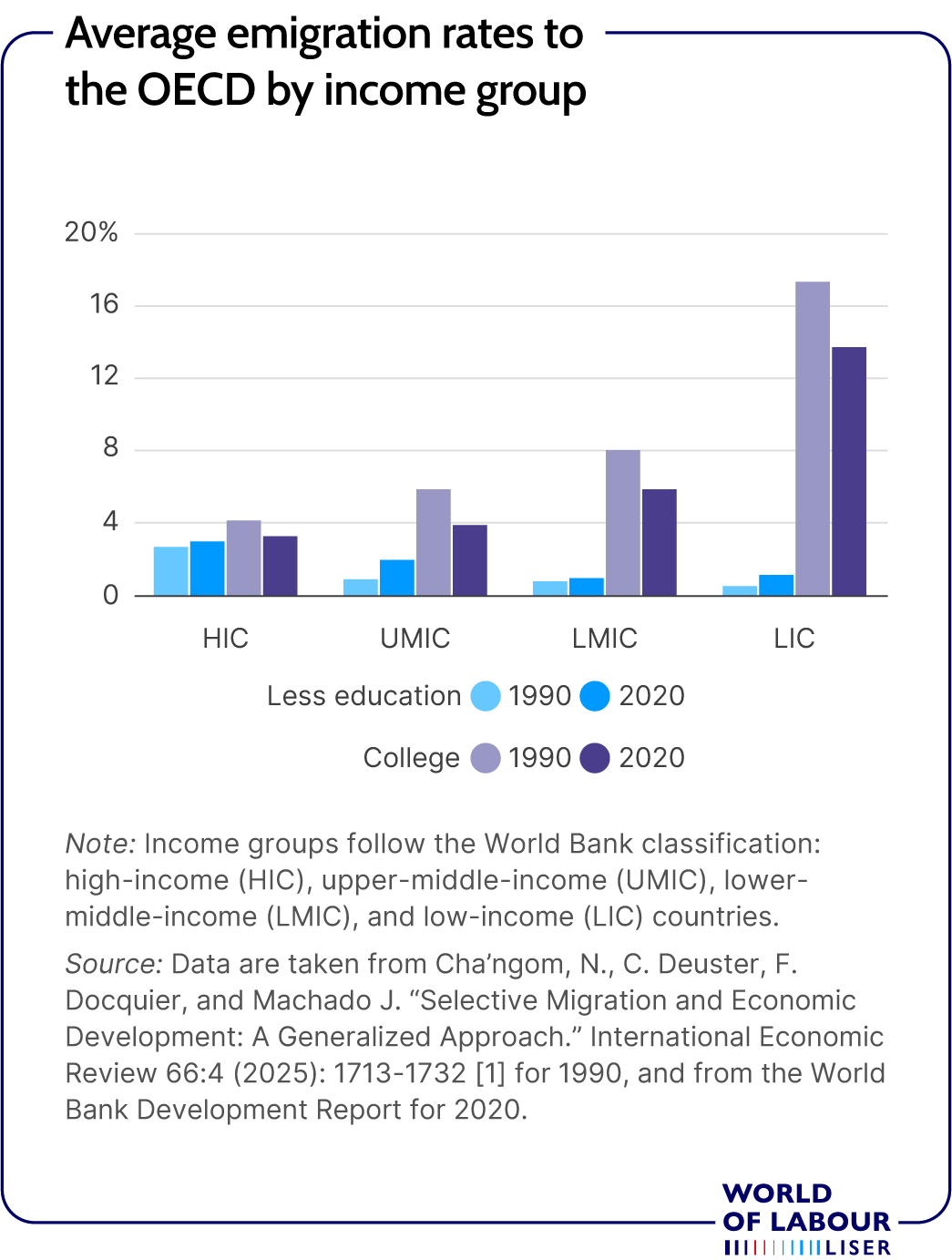
Brain drain refers to the selective emigration of highly educated people, who often have stronger incentives to migrate and face fewer barriers. At first glance, this seems to be an adverse situation: losing doctors, engineers or teachers could hinder development. However, migration can also be beneficial by spurring investment in skills, fueling remittances, fostering innovation, business links, and transfers of knowledge and norms. The net impact depends on the skills involved and the context, creating an opportunity for policies that transform emigration into a driver of development.
Key findings
Pros
Selective emigration raises incentives to invest in higher education and training in developing countries.
Remittances improve household welfare and often finance education or productive local investments.
Diaspora networks and returnees promote trade, foreign investment, transfers of knowledge and social norms.
Recent evidence suggests that many developing countries experience net gains from selective emigration.
Cons
Skilled outflows can create shortages in critical sectors such as health and education.
Short-run fiscal losses arise, especially when publicly funded graduates emigrate permanently.
Brain gain outcomes are less likely in remote regions with limited schooling capacity.


