
Relevanz des Themas
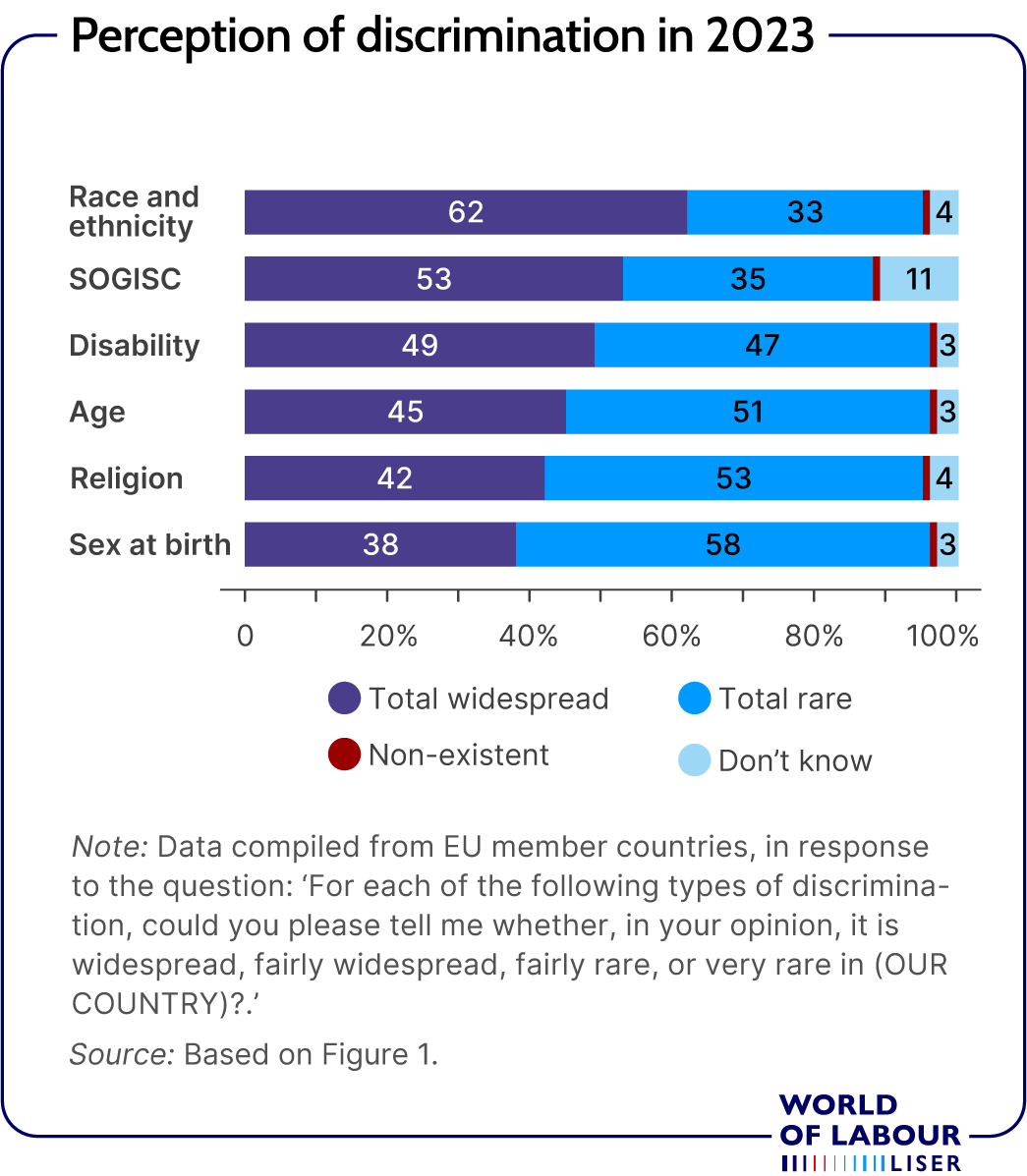
Labour market discrimination is widespread and raises ethical, societal, and efficiency concerns. It not only results in the unfair treatment of individuals with comparable skills, but also imposes broader costs on society by eroding trust and weakening cohesion. Moreover, discrimination limits the full potential of the working-age population by excluding talent or trapping people in roles below their abilities. These effects are amplified by feedback loops: fewer opportunities lower labour market participation and productivity, while the harm discrimination inflicts on mental and physical health further reduces economic output.
Wichtige Resultate
Pro
A legal ban on discrimination against at-risk groups is the bedrock of any anti-discrimination framework.
Monitoring employers’ hiring and career management practices is essential to enforce anti-discrimination laws.
Employers should adopt hiring and career management practices that limit statistical discrimination and the role of (un)conscious bias.
Additional policies addressing pre-existing factors that may constrain the productivity of some groups are key to reduce statistical discrimination.
Some affirmative action policies improve labour market outcomes for beneficiary groups.
Contra
Enforcing anti-discrimination laws remains an issue, especially at the hiring stage.
Collecting the necessary data to enable monitoring is a challenge.
HR practices, including the responsible use of AI, must be grounded in rigorous impact evaluation and continuous auditing.
When productivity constraints among some groups stem from the discrimination they face, breaking the resulting vicious circle is non-trivial.
Besides challenging the principle of equality before the law, affirmative action policies may reinforce discrimination against their intended beneficiaries.


