
Elevator pitch
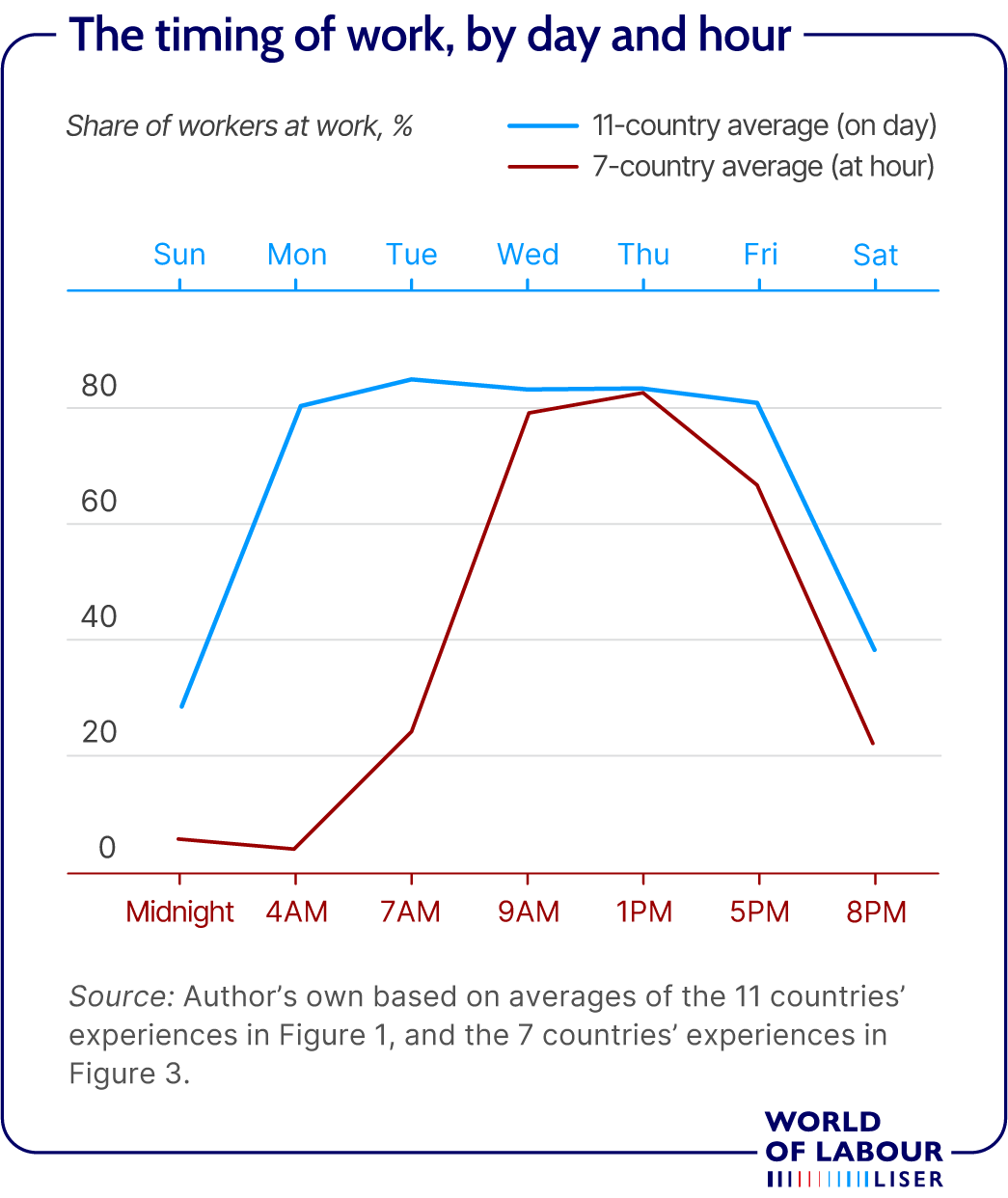
Work on different days of the week is not equally desirable to workers. The same is true for work performed at different times of the day. Undesirable work times are more common among less educated workers, young and quite old workers, minorities, and immigrants. There are substantial cross-country differences in patterns of work timing, with work in lower-income countries distributed more evenly across the week. Policies to affect the timing of work are few, but they do alter outcomes.
Key findings
Pros
Working on weekends is productive in many industries.
Workers prefer leisure on consecutive days.
A four-day workweek allows workers more consecutive leisure time and reduces commuting costs.
Work in the evenings and at night is productive in many industries.
Increased work at home, as occurred during the Covid-19 pandemic, allows workers temporal flexibility that can increase their well-being.
Cons
People generally dislike weekend work because they cannot enjoy leisure time with their families.
Interspersed leisure across days is more common among less educated workers, immigrants, and minorities.
A four-day workweek might reduce productivity.
Workers find evening/night work to be undesirable.
Work at home makes co-ordination of activities among workers more difficult and can thus reduce productivity.


