
Elevator pitch
Israel entered the 2020s with a strong labour market, following more than a decade of rising employment, falling unemployment, and sustained wage gains, a resilience striking given repeated security shocks. Despite the Covid-19 pandemic and the 2023–24 war, aggregate indicators returned relatively quickly towards pre-shock paths. Yet large and persistent gaps in employment and earnings remain, particularly among Arab Israelis and Ultra-Orthodox Jews. With the Ultra-Orthodox share of the working-age population growing rapidly, the stakes of closing these gaps are rising.
Key findings
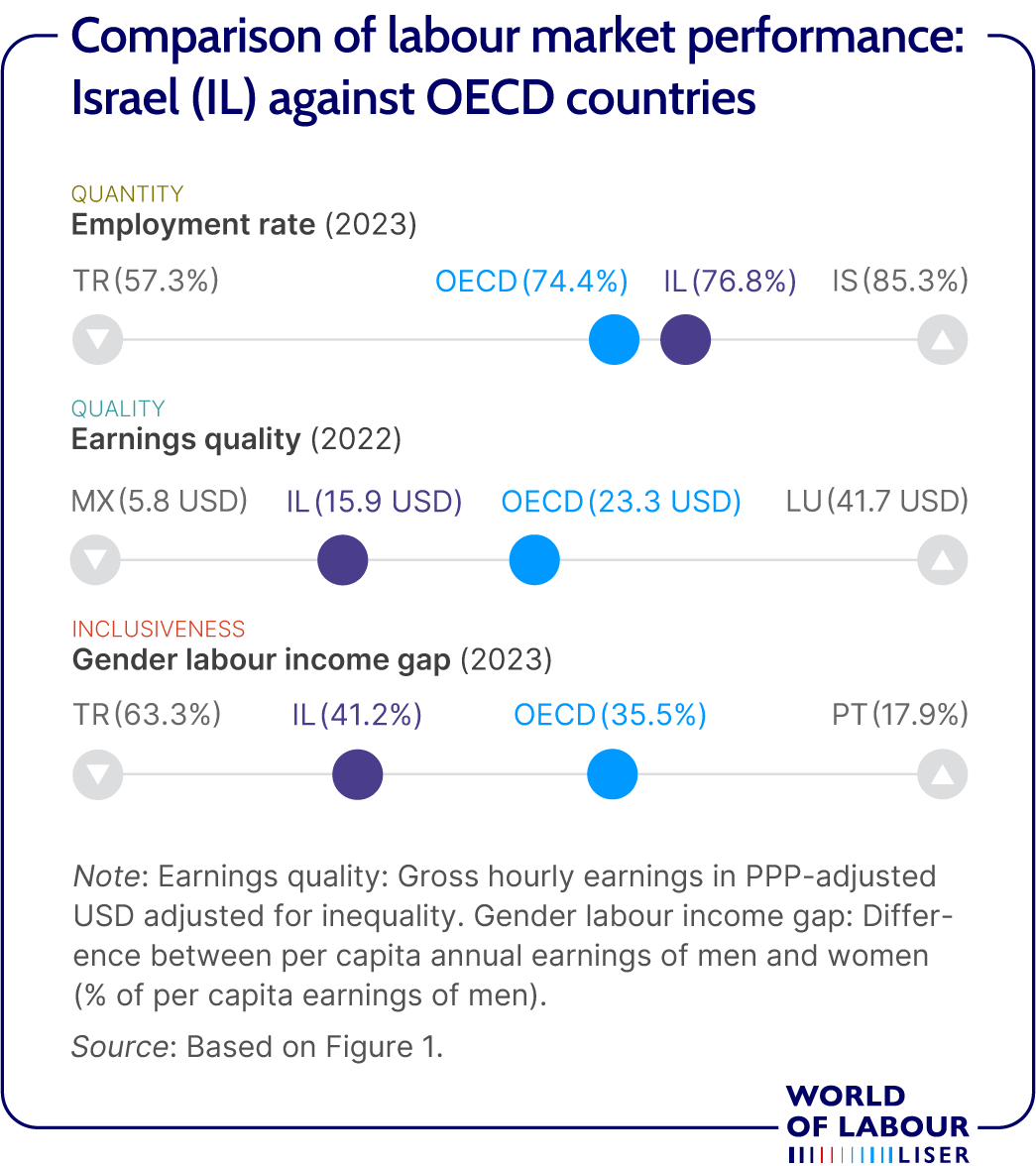
Strengths
Employment rates for both men and women rose substantially, reaching or exceeding OECD and US levels before the 2020 shocks.
Israel’s gender employment gap narrowed to just five percentage points, among the smallest in the developed world.
Unemployment fell to historic lows, reaching below 3% in 2024 despite two major shocks.
Arab women’s employment more than doubled over the period, from 19.8% to 46.9%.
Ultra-Orthodox women’s employment has nearly converged to non-Orthodox Jewish women’s rates.
Weaknesses
Men’s employment did not fully recover after Covid-19 and was further depressed by the 2023–24 war.
Large earnings gaps remain: Arab and Ultra-Orthodox men earn roughly half the monthly wages of non-Orthodox Jewish men.
Ultra-Orthodox men’s employment has stagnated since the mid-2010s, far below the non-Orthodox benchmark.
Arab women’s employment, despite its rise, remains one of the largest gaps in Israel’s labour market.
The rising Ultra-Orthodox share of the working-age population risks slowing aggregate productivity if gaps do not narrow.
Author's main message
Israel’s labour market proved resilient over the last two decades, returning relatively quickly to pre-shock trajectories after both Covid-19 and the 2023–24 war. This reflects sustained policy efforts that raised the payoff to work, including the expansion of in-work benefits. However, the central structural challenge persists: Arab Israelis and Ultra-Orthodox Jews remain far below non-Orthodox Jews in employment and earnings. A unified metric–income from work per adult–highlights the scale of the integration gap. Demographic change raises the stakes of closing these gaps, making integration and human capital investment the central policy priorities.
Motivation
Israel’s labour market has undergone a remarkable transformation over the past two decades. Following a period of high unemployment and low employment at the turn of the century, sustained policy reforms including cuts to welfare payments, expansion of in-work benefits, and increases in the mandatory retirement age, drove a prolonged rise in employment for both men and women. By the late 2010s, Israel’s employment rate exceeded the US and approached the OECD frontier, and unemployment had fallen to historic lows.
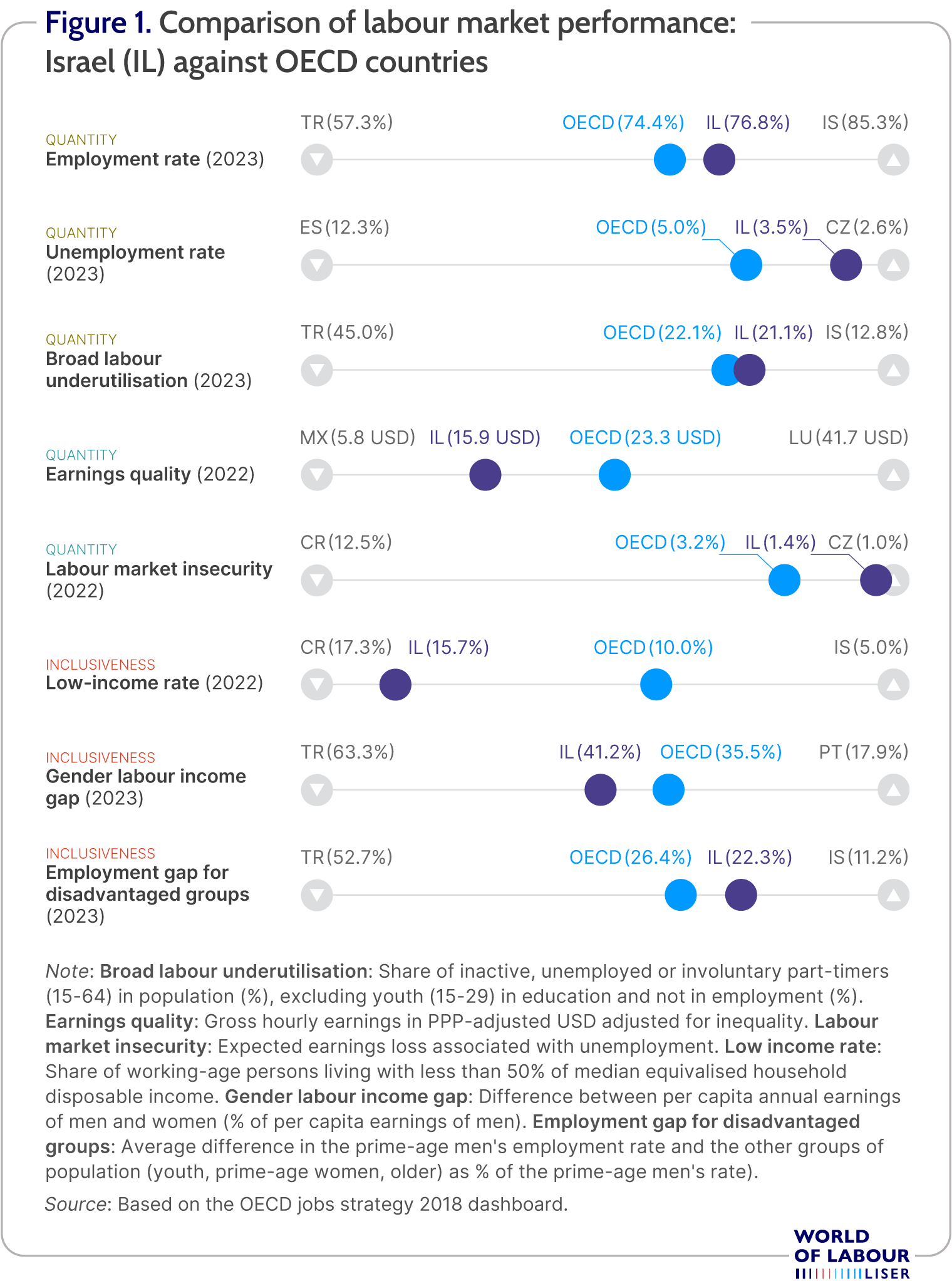 This resilience was tested by two exceptional shocks: the Covid-19 pandemic and the outbreak of war in October 2023. Both caused sharp but ultimately temporary disruptions to aggregate labour market indicators, which returned relatively quickly towards pre-shock paths. Yet beneath the aggregate picture, deep structural challenges persist. Arab Israelis and Ultra-Orthodox Jews remain far below the majority population in employment and earnings. Closing these gaps is the central long-run challenge facing Israeli policymakers, made increasingly urgent by the rapid demographic growth of the Ultra-Orthodox, whose share of the working-age population is rising steadily.
Discussion of strengths and weaknesses
Employment
Israel’s employment rate of both men and women, increased substantially during the last two decades. Yet for men, Covid-19 and the 2023–24 war had a significant negative effect on employment, and the rate did not converge to the previous trend, while women’s employment had a minor drop during Covid-19 and since then returned to the previous positive trend.
Figure 2 shows that by 2004, men's employment rate was 75%, about 5–8 percentage points lower than in the US and the OECD. It then rose steadily, surpassing the US rate before the Covid-19 shock. The pandemic reduced men's employment by a similar magnitude as in the US, but unlike the US, the subsequent recovery was incomplete and the 2023–24 war pushed the rate further down, leaving it slightly below the US, OECD, and benchmark countries. Women’s employment was below the comparison groups by 2004, yet it increased monotonically throughout the period, with a minor decline during Covid-19, and it is now above the US and the OECD and closing the gap with the benchmark countries. This remarkable convergence has reduced Israel's gender employment gap to just five percentage points, a striking achievement that places Israel well below the US and OECD average of 11.1 percentage points, and even below the benchmark countries at 5.5 percentage points.
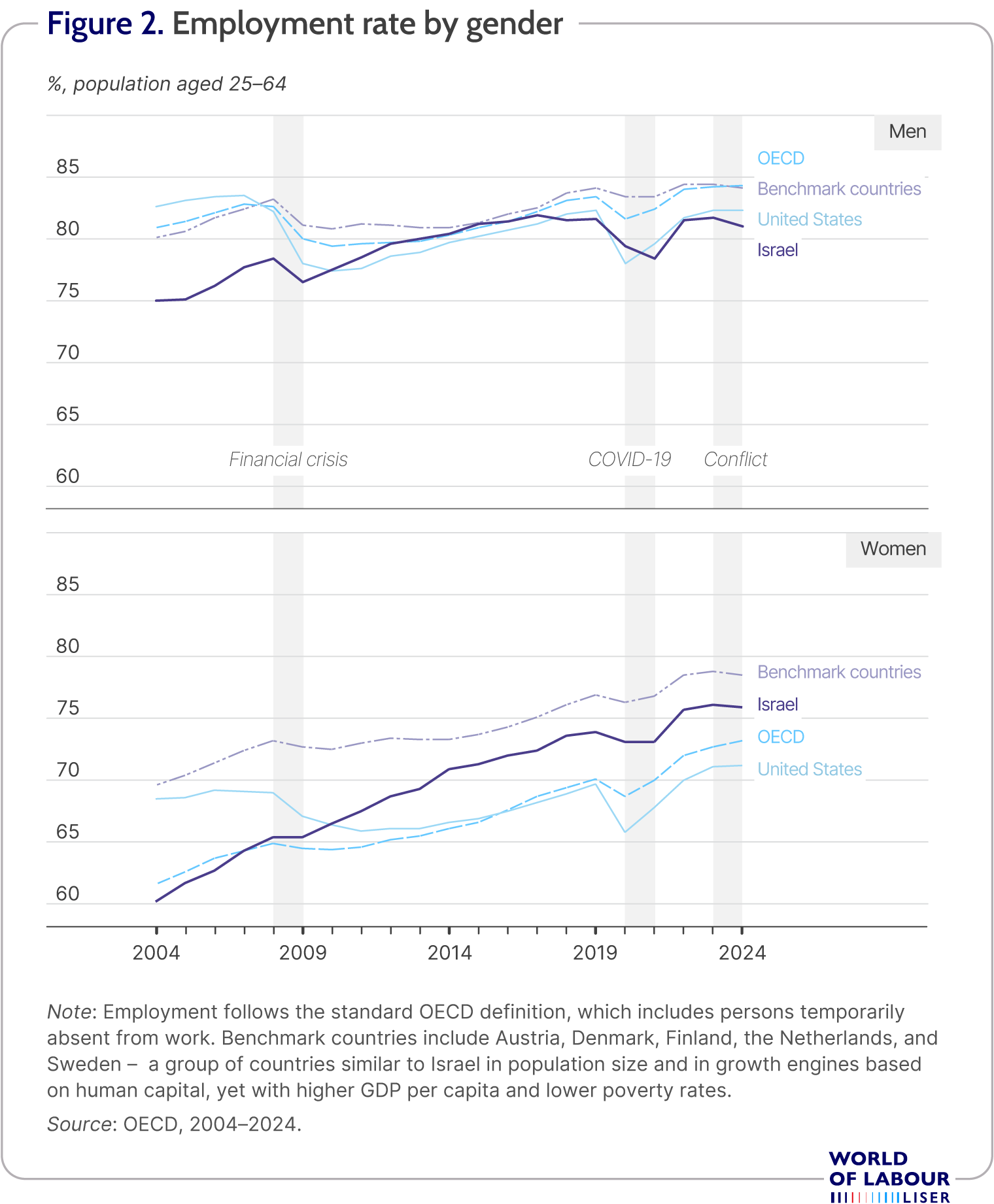 Figure 2 follows the standard OECD definition of employment, which includes persons temporarily absent from work, to ensure international comparability. However, as will be discussed below, the scale of absences in Israel during Covid-19 and the 2023–24 war was exceptionally large, which may inflate the headline rate relative to actual labour utilisation [1]. Figure 5 will address this by reporting an "effective employment" rate that excludes absentees.
Unemployment
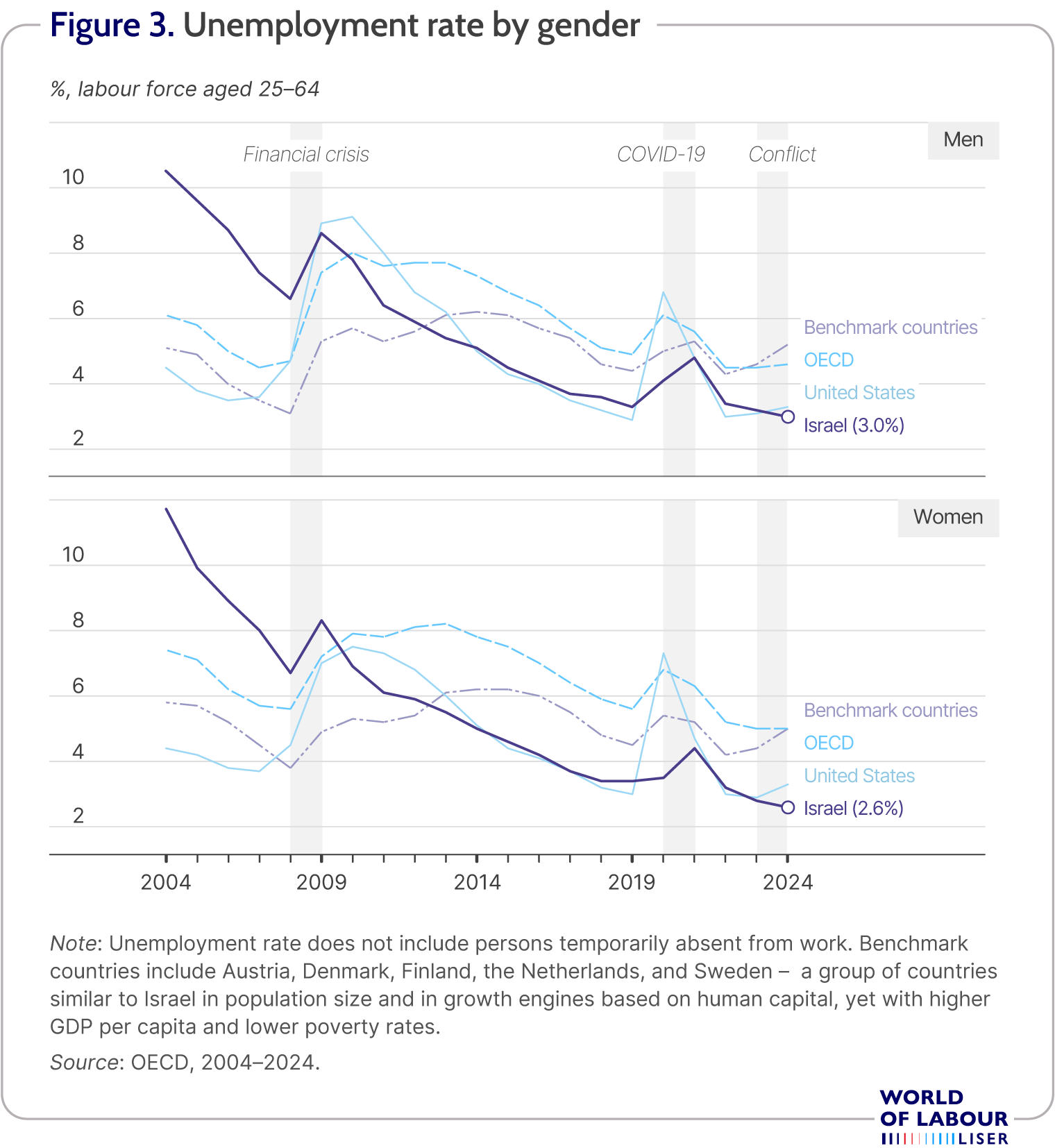
In 2004, Israel’s unemployment rate was relatively high (around 10-11%). It then declined sharply, with temporary increases during the 2008 global crisis and during Covid-19. The 2023–24 war did not raise unemployment in the expected way; by 2024, the unemployment rate had fallen to below 3%, its lowest level in more than four decades. However, as noted above, the unemployment rate does not capture absentees, further underscoring the value of the effective employment measure introduced in the previous section.
Figure 3 presents international unemployment comparisons. In 2004, Israel’s unemployment rate for both men and women were above the benchmark groups; by 2024, it was below all. This pattern is consistent with a tight labour market and persistent labour shortages, especially in lower-wage occupations [2].
 Israel's unique demographics
Israel’s labour market is shaped by a distinctive demographic structure. The working-age population can be divided into three major population groups: non-Orthodox Jews 71%, Ultra-Orthodox Jews 9%, and Arabs 21%. The latter two groups have historically been characterised by lower employment rates, higher poverty, greater reliance on transfers, and lower average education, making their labour market integration central for Israel’s long-run growth prospects. At the same time, demographic trends amplify the macroeconomic importance of closing gaps: fertility rates among non-Orthodox Jews and Arabs are close to replacement rate and stable, while fertility among Ultra-Orthodox is substantially higher, implying a rising Ultra-Orthodox share in the working-age population over time.
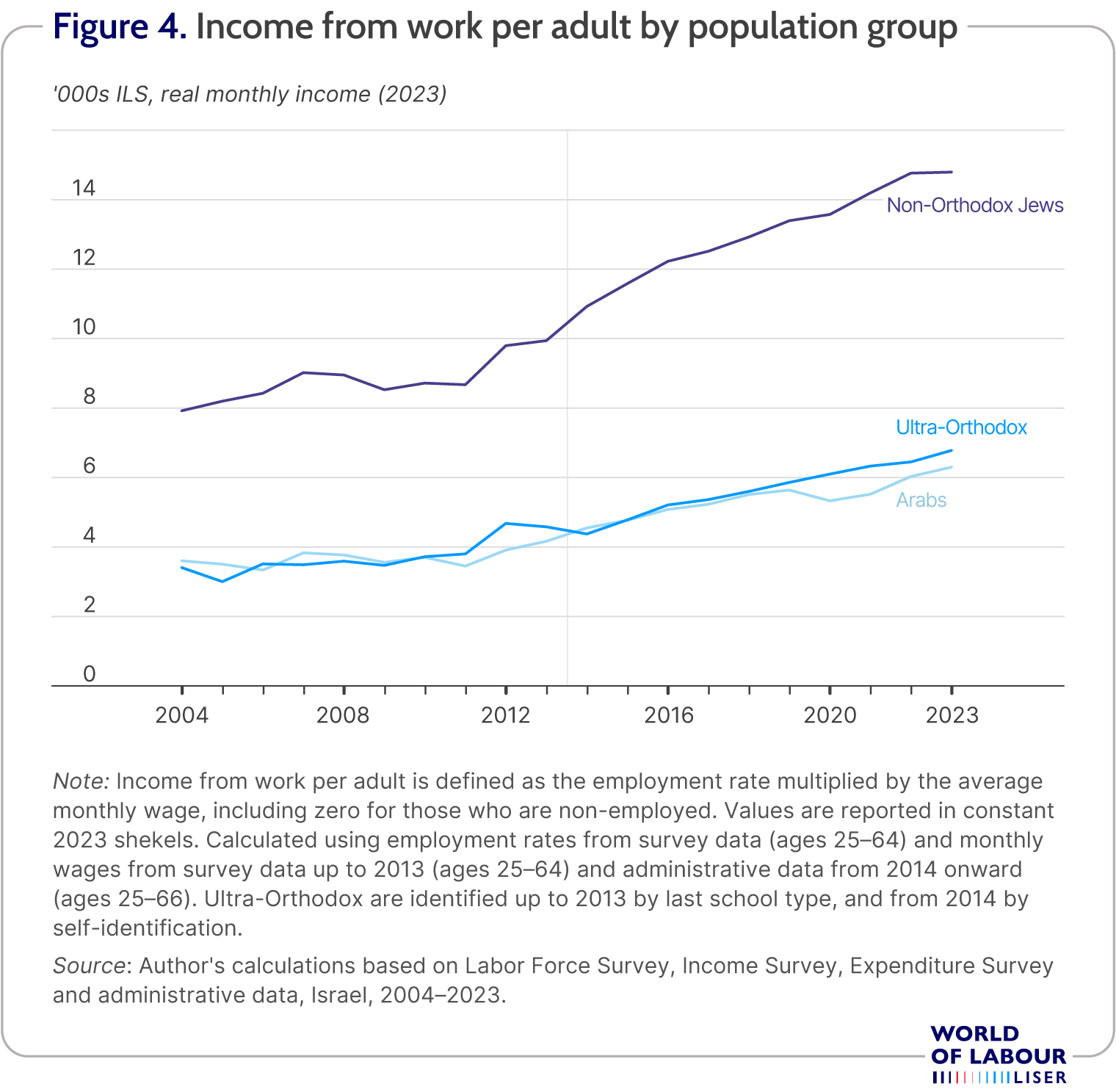
To summarise economic integration across population groups, income from work per adult is used, defined as the product of the employment rate times the monthly wage. This measure captures both the extensive margin (whether people work) and the intensive margin (how much they earn when employed), making it more informative than either measure alone. Compared to income per worker, it does not condition on employment and therefore reflects the full population-level gap, including non-participation. Compared to household income, it is not confounded by household size or transfer payments, isolating the contribution of labour market attachment to material wellbeing. All figures report real values in 2023 shekels.
As can be seen from Figure 4, the trends for Arabs and Ultra-Orthodox are quite similar and much lower than the non-Orthodox Jews, where the gap is more than 100%. The similar trends are a result of a different mechanism. For the Ultra-Orthodox the men are the main reason for the gap, while for Arab each gender contributes equally to the gap.
 The gaps in work income per adult are a result of both lower employment and lower wages which will be described now. Figure 5 therefore reports employment rates by population group and gender and distinguishes between employment and “effective employment”–the employment rate net of absentees–from 2019 onward. Comparing the aggregate in Figure 2 to the trends by group in Figure 5 reveals that aggregate employment trends can look strong even when sizeable parts of the population remain weakly attached to the labour market and that Israel’s strong aggregate performance masks persistent and large employment gaps across population groups, with particularly low employment among Arab women and Ultra-Orthodox men.
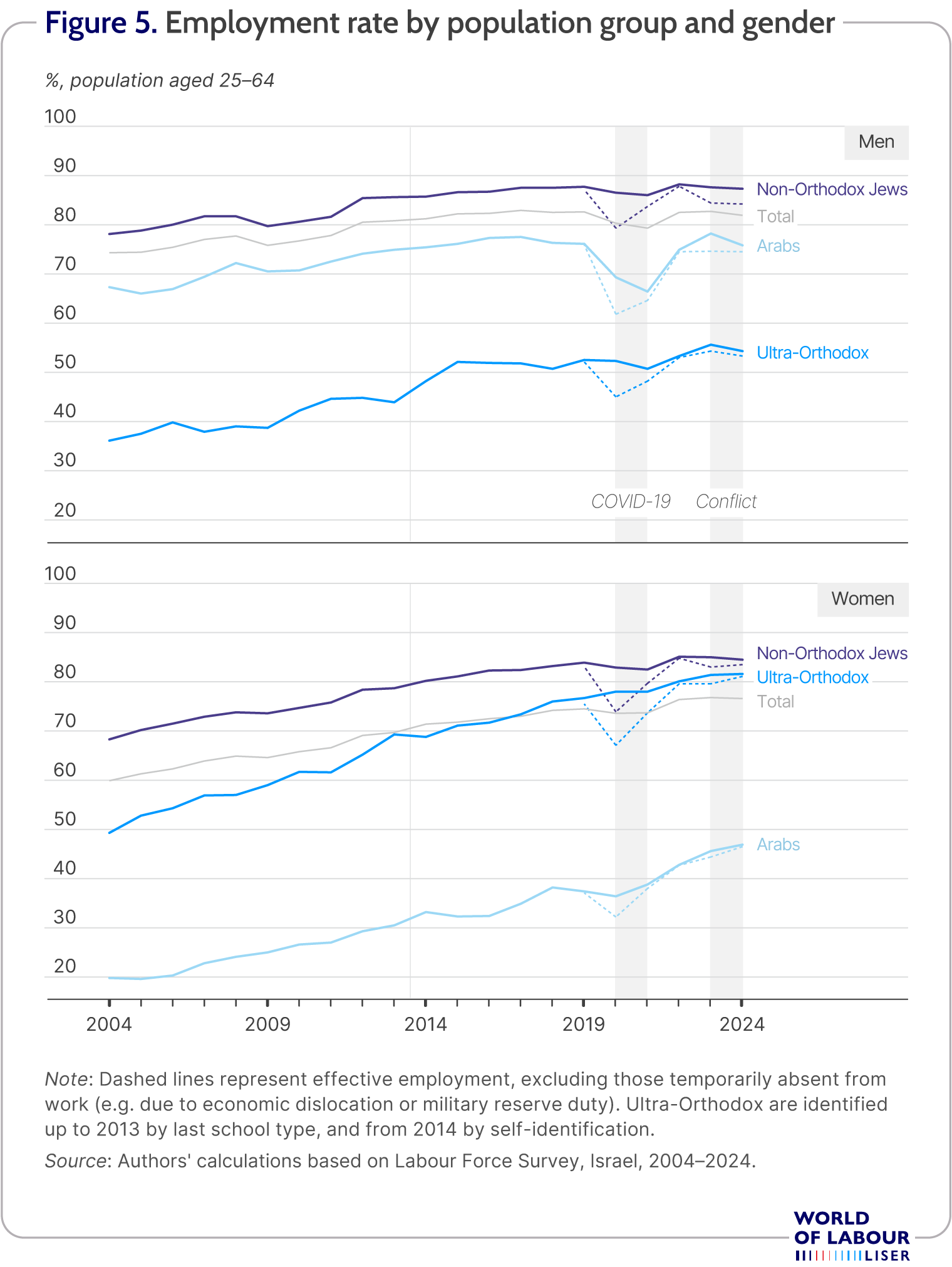 The gap between the solid and dashed lines reflects the scale of labour market disruption due to Covid-19 furloughs and reserve duty mobilisation during the 2023–24 war [3]. Employment trends differ sharply across groups. Arab men’s employment rose steadily up to the Covid-19 shock, but did not fully recover thereafter, and the war period further reduced employment. By 2024, the employment rate of Arab men remains roughly 12 percentage points below the non-Orthodox Jewish benchmark. Arab women’s employment increased markedly over the past two decades, more than doubling from 19.8% to 46.9%, yet it remains far below the level of Jewish women, making it one of the largest remaining gaps in Israel’s labour market [4].
Among Ultra-Orthodox, gender differences are particularly pronounced. Ultra-Orthodox men’s employment increased rapidly up to the mid-2010s but has been broadly stable since, remaining substantially below non-Orthodox Jewish men. The macroeconomic significance of this gap has grown as the Ultra-Orthodox share in the working-age male population increased over time. In contrast, Ultra-Orthodox women’s employment rose monotonically and has nearly converged to non-Orthodox Jewish women’s employment rates. Notably, Ultra-Orthodox are one of the few groups in the world in which women are often the primary earners.
These employment gaps translate into large differences in labour income across population groups. However, income gaps also reflect differences in wages and hours worked conditionally on employment, topics that will be discussed next.
Figure 6 reports real monthly wages (for those aged 25–64) by population group, separately for men and women. The figure highlights large and persistent earnings gaps: among men, average monthly wages in 2023 are about half as high among Arabs and Ultra-Orthodox as among non-Orthodox Jewish men (roughly 55% and 51%, respectively). Among women, the gaps are smaller but still substantial: Arab women earn about 59% of Jewish women’s monthly wages, while Ultra-Orthodox women earn about 70%.
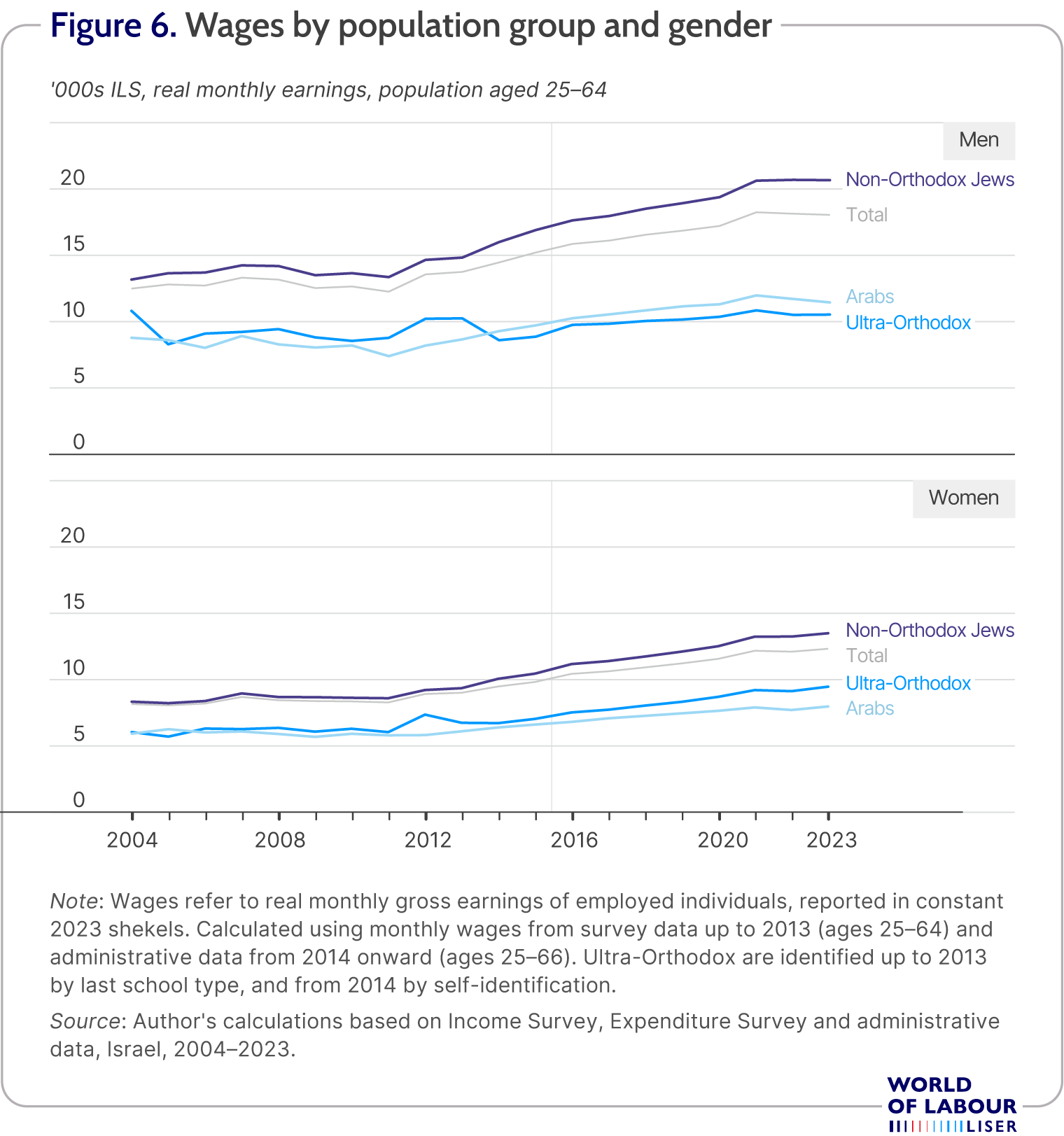 Earnings gaps between population groups reflect different combinations of hourly wages and hours worked. For Arab men, most of the monthly earnings gap is explained by lower hourly wages (their hourly wage is about 61% of Jewish men), while their weekly hours are relatively close (about 95%). For Ultra-Orthodox men, both margins matter: hourly wages are around 70% of Jewish men, and weekly hours are notably lower (about 81%). For women, both margins contribute for Arabs (hourly wages about 76% and hours about 87% of Jewish women), whereas for Ultra-Orthodox women the gap is comparatively more concentrated in hours (about 85%), with hourly wages closer to parity (about 90%). These patterns suggest that closing gaps requires different policy levers across groups, productivity and wage capacity in some cases, and constraints on hours and attachment to work in others, while differences in human capital remain an important part of the explanation [5], [6].
Figure 7 shows a broad and persistent rise in tertiary attainment from the early 2000s, alongside large and fairly stable gaps across population groups and gender. Non-Orthodox Jews remain at the frontier throughout the period, with college graduation increasing steadily for both men and women (by 2024, roughly the low-40s percent for men and just above 50% for women). Arabs start from a much lower base but experience sustained growth, especially among women, so that by 2024 Arab women are close to 30%, while Arab men are in the low-20s. Ultra-Orthodox men remain the clear outlier: their college graduation rate is low throughout and rises only modestly over time (around 10% by 2024), leaving a large and persistent human-capital gap relative to the rest of the economy. In contrast, Ultra-Orthodox women record substantial gains, accelerating in the 2010s, and by 2024 reach roughly one-third.
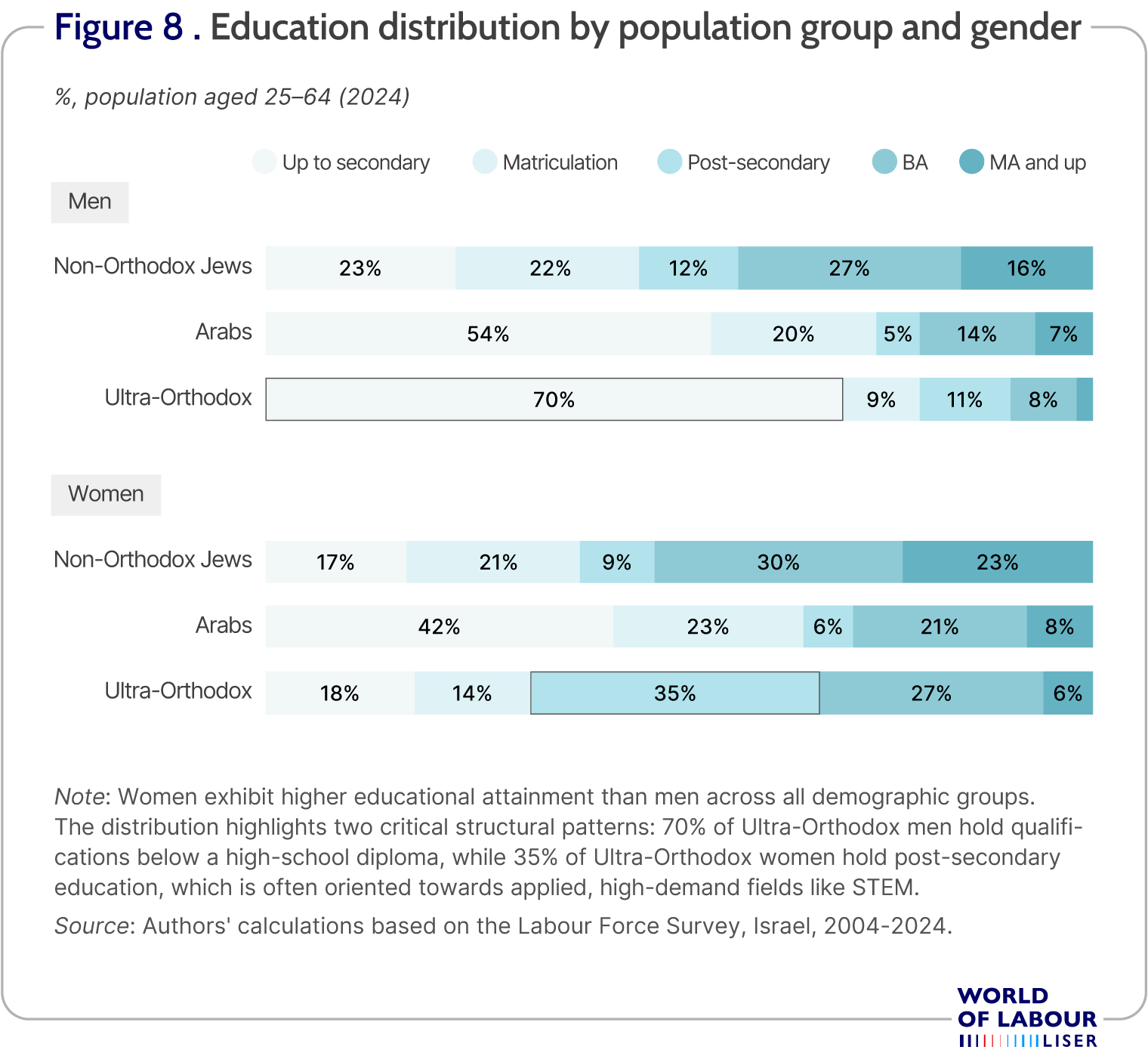
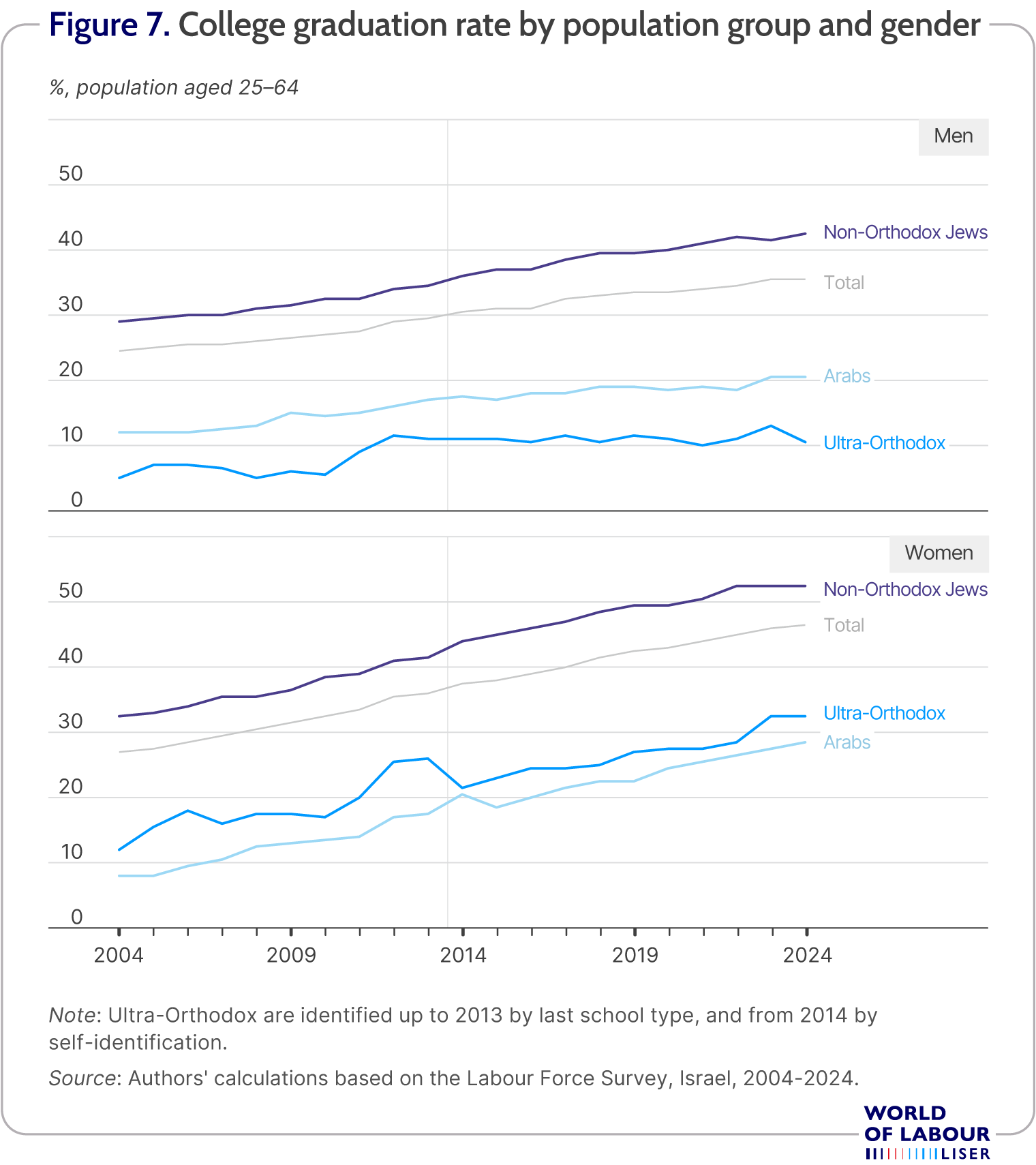 Importantly, for Ultra-Orthodox women formal college graduation understates their labour-market relevant training: a sizable share of Ultra-Orthodox women obtains post-secondary (non-academic) education, which is often oriented towards applied, high-demand fields like STEM. As a result, roughly two-thirds of Ultra-Orthodox women have at least post-secondary education (Figure 8), underscoring that their educational upgrading is not captured by college graduation rates alone. Figure 8 presents the education distribution by population group and gender as of 2024. Five levels of education are used: up to secondary, matriculation, post-secondary (non-academic), bachelor’s degree and master’s degree and above. A few facts emerge from the figure. The first is that women are more educated than men in all groups. Second, 70% of Ultra-Orthodox men has an education which is less than high-school diploma and are far below any other population group.
 Welfare payments
Since 2002, Israel’s tax-and-transfer system has undergone repeated reforms intended to strengthen work incentives by raising the return to employment relative to non-employment. These reforms coincided with substantial increases in employment and hours worked [5]. A prominent element of this incentive-based approach has been the gradual expansion of in-work benefits (the Earned Income Tax Credit), which strengthened incentives for low-wage workers and supported broad-based employment growth [7]. Over the last decade, however, several measures targeted to Ultra-Orthodox households may have reduced the marginal payoff to work for men, consistent with the prolonged stagnation in Ultra-Orthodox men’s employment.
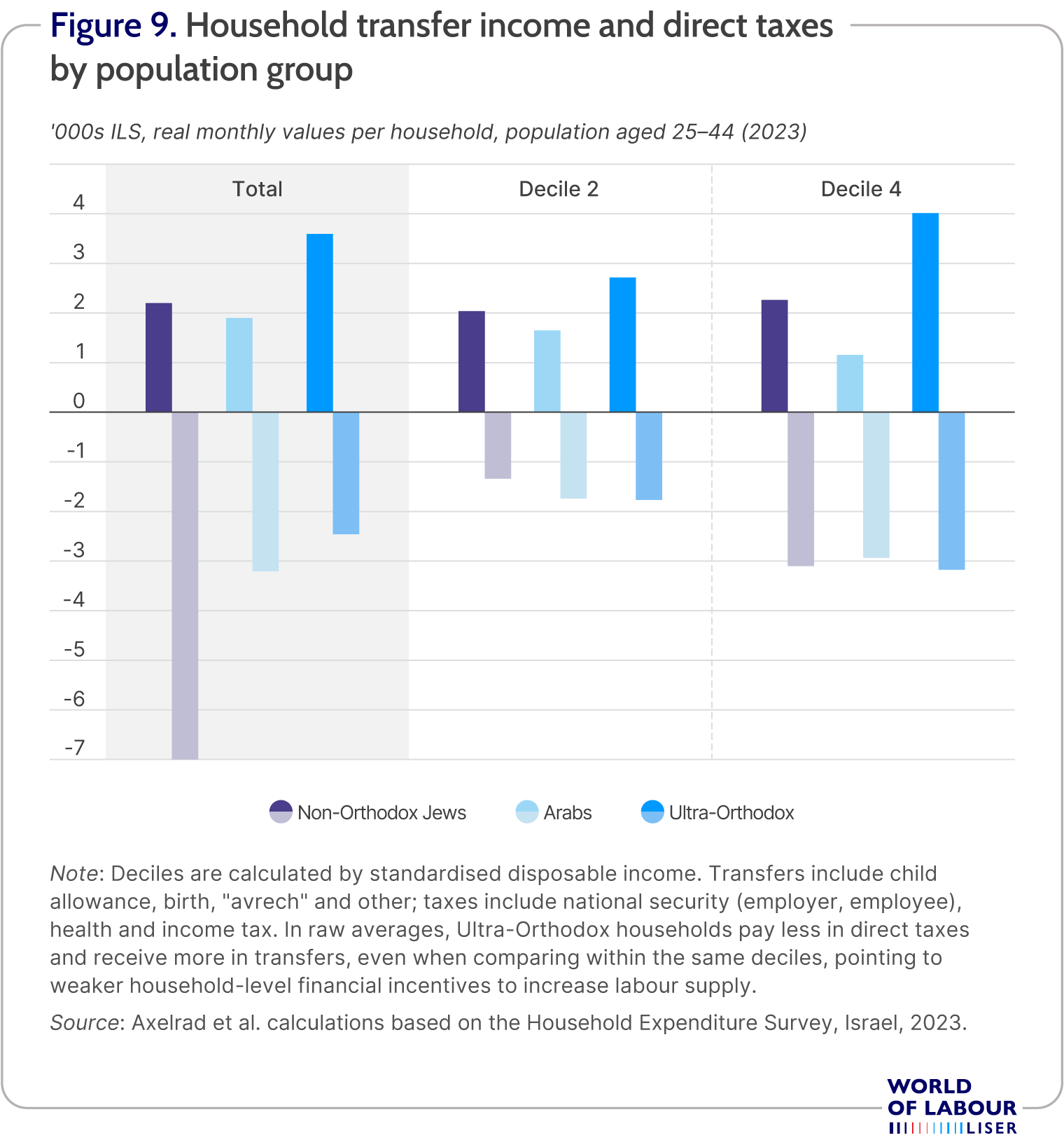
To illustrate these incentive patterns, Figure 9 compares direct taxes paid and transfer income across household types. In raw averages, Ultra-Orthodox households pay less in direct taxes and receive more in transfers. Because these households are typically larger and have lower market income, raw comparisons can be misleading; therefore also households within deciles of standardised disposable income are compared. Even within deciles, Ultra-Orthodox households receive substantially higher transfers, pointing to weaker household-level financial incentives to increase labour supply [8].
 These incentive patterns interact with a particularly severe human-capital constraint among Ultra-Orthodox men. The vast majority are educated in separate school tracks with limited exposure to core subjects, especially mathematics and English, and very low matriculation completion, as discussed above. Together, weaker market skills and weaker work incentives can sustain low employment and slow movement into higher-productivity sectors, widening long-run income gaps [9].
Limitations and gaps
One limitation is the focus mainly on the main labour market outcomes: employment, unemployment, and wages examined at the aggregate level and by population group. Several dimensions are therefore beyond this scope: the distribution of workers across occupations and economic sectors; part-time versus full-time employment trends; and the dynamic transitions in and out of the labour force. Geographic variation in labour market outcomes, particularly between Israel’s centre and periphery, is also not addressed.
On the data side, income and wage series extend only through 2023 due to the lag in administrative data, and the identification of Ultra-Orthodox individuals shifts from school-type classification before 2014 to self-identification thereafter, introducing a minor break in comparability.
Finally, the long-run labour market consequences of the 2023–24 war remain difficult to assess, as the situation was still evolving at the time of writing.
Summary and policy advice
Overall, Israel’s labour market remains relatively strong in international perspective, but the post-2020 period was characterised by sharp disruptions and recovery dynamics that differ across gender and population groups. The central structural challenge remains the persistent gap in economic integration of Arabs and Ultra-Orthodox, reflected in both employment and earnings. These gaps are increasingly consequential given Israel’s demographic trajectory and the long-run importance of sustained labour force growth. Maintaining integration policies that successfully expanded employment should remain a priority, but policy must also place greater weight on the earnings margin through human capital investment, skill acquisition, and productivity-enhancing pathways into higher-paying sectors.
Israel’s main long-run challenge is on the supply side: the composition of the working-age population is shifting towards groups with lower employment and weaker human capital, while the employment and earning gaps among Ultra-Orthodox men and among Arab Israelis remain large. If these gaps do not narrow, aggregate employment growth and productivity are likely to slow, pushing Israel towards a “stagnation scenario” with lower per-capita growth and wider inequality [6], [10]. A second challenge is preserving Israel’s high-skilled workforce and the dynamism of its high-tech sector under prolonged geopolitical uncertainty.
However, Israel also has a clear upside scenario. Continued integration into work, especially sustained gains in Arab women’s employment and higher employment among Ultra-Orthodox men, combined with targeted investments in skills can raise both participation and productivity. High tech can play a central role in this path, not only through direct employment and exports but also through diffusion of technology and management practices to the broader economy. In addition, emerging areas such as AI and defence-related technologies may create new high-productivity opportunities, provided that access to relevant training broadens and pathways into skilled occupations expand beyond the traditional high-tech workforce.
Acknowledgments
The authors thank the World of Labour editors for many helpful suggestions on earlier draft. This article draws extensively on research conducted at the Aaron Institute for Economic Policy at Reichman University. Previous work of the authors contains a larger number of background references for the material presented here and has been used intensively in all major parts of this article [5], [6], and previous Version of this article.
Version 2 extends the analysis through 2024, adds evidence from the Covid-19 pandemic and the 2023–24 war, introduces a unified "income from work per adult" metric, and pays particular attention to Arabs and Ultra-Orthodox Jews.
Competing interests
The World of Labour project is committed to the European Code of Conduct in Research Integrity. The authors declare to have observed the principles outlined in the code.
© Osnat Lifshitz and Tali Larom


