
Elevator pitch
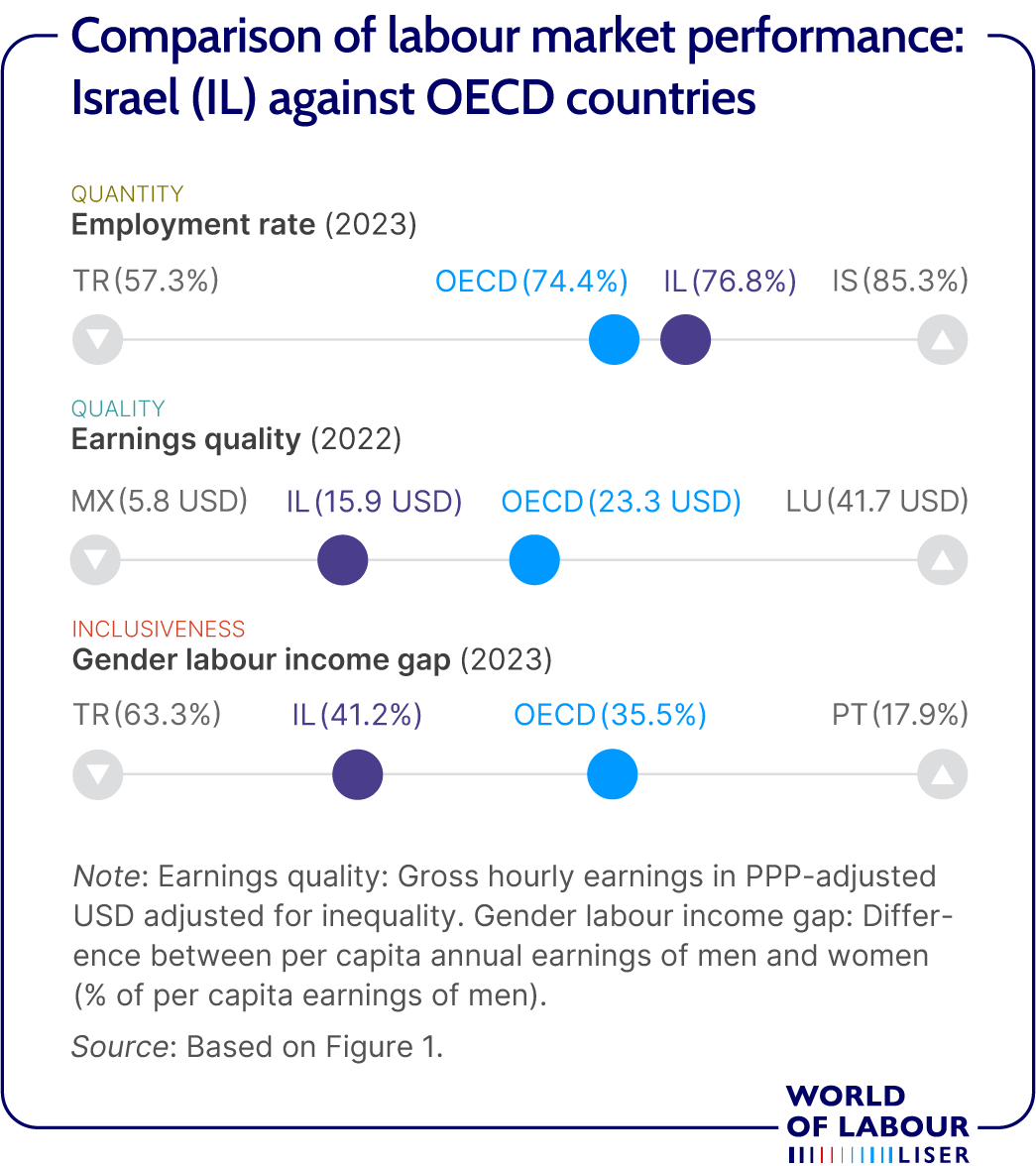
Israel entered the 2020s with a strong labour market, following more than a decade of rising employment, falling unemployment, and sustained wage gains, a resilience striking given repeated security shocks. Despite the Covid-19 pandemic and the 2023–24 war, aggregate indicators returned relatively quickly towards pre-shock paths. Yet large and persistent gaps in employment and earnings remain, particularly among Arab Israelis and Ultra-Orthodox Jews. With the Ultra-Orthodox share of the working-age population growing rapidly, the stakes of closing these gaps are rising.
Key findings
Strengths
Employment rates for both men and women rose substantially, reaching or exceeding OECD and US levels before the 2020 shocks.
Israel’s gender employment gap narrowed to just five percentage points, among the smallest in the developed world.
Unemployment fell to historic lows, reaching below 3% in 2024 despite two major shocks.
Arab women’s employment more than doubled over the period, from 19.8% to 46.9%.
Ultra-Orthodox women’s employment has nearly converged to non-Orthodox Jewish women’s rates.
Weaknesses
Men’s employment did not fully recover after Covid-19 and was further depressed by the 2023–24 war.
Large earnings gaps remain: Arab and Ultra-Orthodox men earn roughly half the monthly wages of non-Orthodox Jewish men.
Ultra-Orthodox men’s employment has stagnated since the mid-2010s, far below the non-Orthodox benchmark.
Arab women’s employment, despite its rise, remains one of the largest gaps in Israel’s labour market.
The rising Ultra-Orthodox share of the working-age population risks slowing aggregate productivity if gaps do not narrow.


