
Elevator pitch
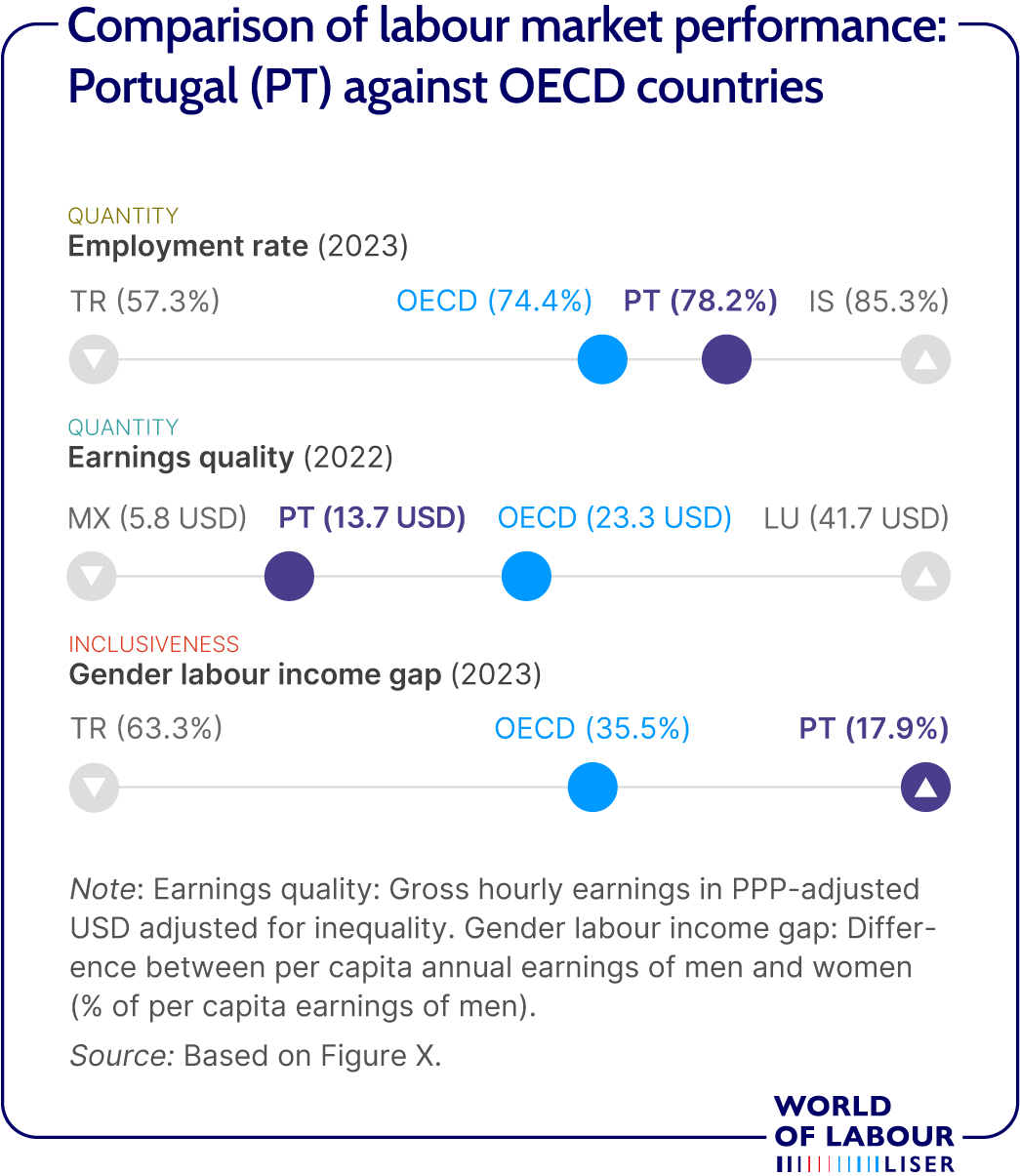
The Portuguese labour market has stabilised after the 2010–2013 sovereign debt crisis, which pushed unemployment to a historic 18.5%. By 2025, the rate of unemployment has exhibited low-record levels reaching 5.9%. Long-term unemployment has declined, and the female employment rate reached historical values. Yet, several structural imbalances persist. Productivity levels remain low compared to European peers, and wages continue to struggle to keep pace with the cost of living.
Key findings
Strengths
Employment reached record levels by 2024, with the gender employment gap decreasing by 11.2 percentage points since 2000.
Unemployment has consistently declined after the debt crisis, reaching a record level in the second quarter of 2025.
Long-term unemployment has dropped.
The percentage of the employed aged 25-34 with a tertiary degree more than tripled since 2000.
The unadjusted gender wage gap has been decreasing since 2016, placing Portugal among the top 10 best performers in the EU-27.
Weaknesses
Productivity has stagnated for over two decades, failing to converge with the EU-27 average.
Even though real wages have increased since the debt crisis with minimum wages representing about two-thirds of median wages, Portugal stands as a low-wage country within the EU.
Labour market segmentation persists, with employment instability lasting up to the age of 35.
Youth unemployment remains high.
The percentage of employers with lower secondary education or less remains too high, which places Portugal as the bottom EU performer.


