
Elevator pitch
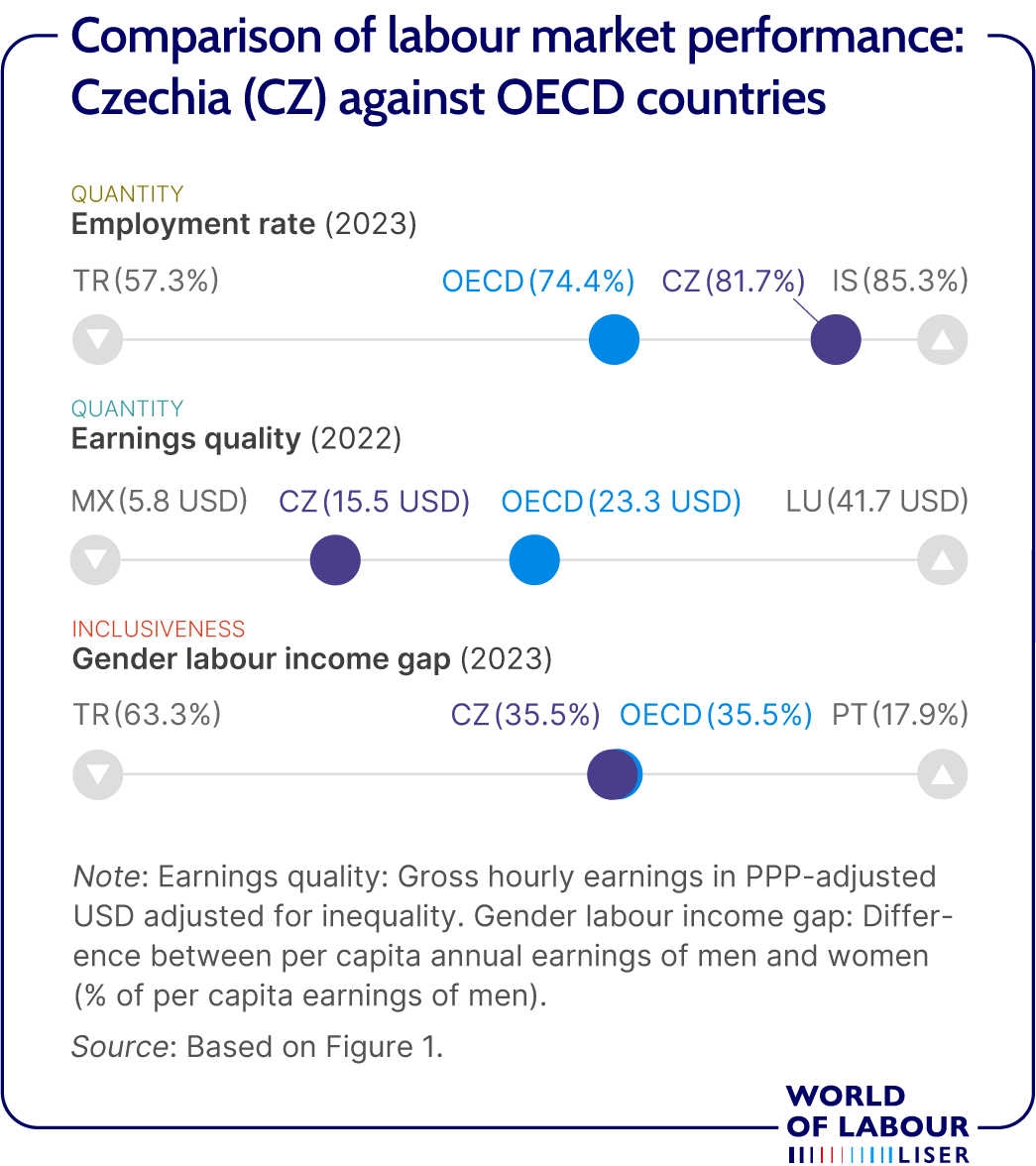
Czechia’s labour market has undergone a remarkable transformation over the past two decades. Unemployment has fallen sharply, while employment has steadily increased and continues to be among the highest levels across OECD countries. At the same time, rising real wages have not fully closed the gap with the OECD average, and the minimum wage remains relatively low compared to other countries. Gender gaps in employment and unemployment have narrowed, yet a substantial gender pay gap remains, highlighting persistent inequalities in the labour market.
Key findings
Strengths
Unemployment declined across all demographic groups between 2000 and 2025.
The unemployment rate is among the lowest and the employment rate ranks among the highest in the OECD.
Gender unemployment and employment gaps have declined over the past two decades.
Czech earnings inequality is moderate by regional standards and has remained broadly stable.
Weaknesses
The employment rate among mothers with young children remains substantially lower than in the rest of EU.
The gender pay gap of 18.5% is almost twice as large as the average gap in the EU.
Despite the real wage increase by 50% between 2000 and 2025, the wage level continues to be well below the OECD average.
The use of active labour market policies and the scale of retraining programmes for the unemployed remain limited.
The Czech labour market is among the least dynamic in the EU in terms of job-to-job mobility.


