
Elevator pitch
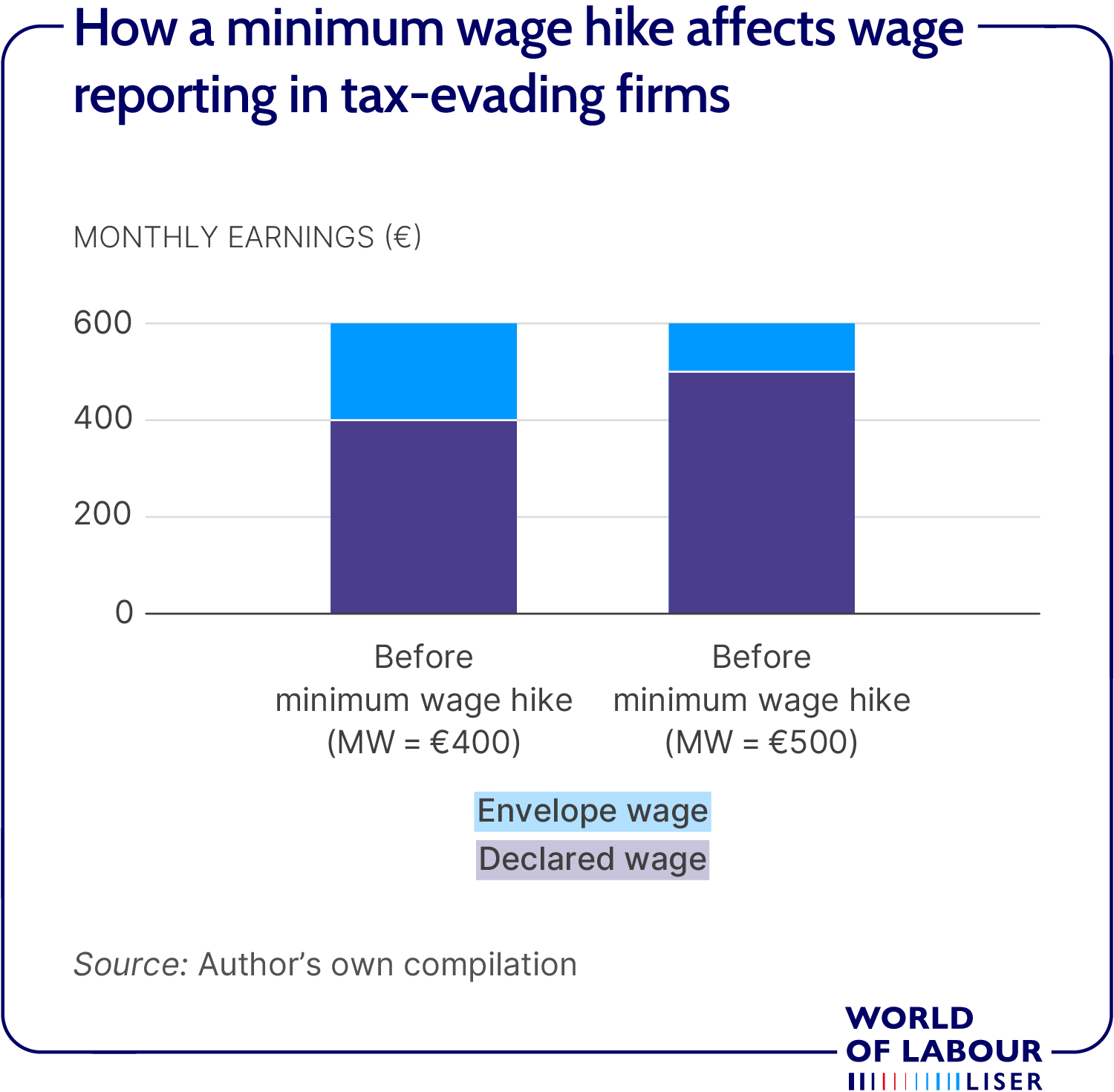
How do minimum wage policies interact with labour tax evasion? In many transition economies, two features stand out: a large spike in the wage distribution at the minimum wage and widespread use of “envelope wages”—undeclared cash paid in addition to official earnings. This spike can be explained by the over-representation of tax-evading employers among minimum wage payers. In such a context, raising the minimum wage may serve as an enforcement tool by compelling evading firms to convert part of the undeclared pay into formal wages in order to comply with the legal minimum.
Key findings
Pros
Raising the minimum wage reduces income underreporting among labour tax (and social security contributions)-evading firms.
Envelope wages provide an adjustment margin, allowing firms to comply without reducing total pay.
Firms that underreport wages are less likely to cut employment in response to a minimum wage hike.
Higher formal wages boost personal income tax and social security contribution revenues.
Cons
Not all firms engage in labour tax evasion making them more sensitive to minimum wage policy.
Minimum wage hikes can lead to job losses in firms that already fully comply with wage regulations.
Firms using envelope wages will lose an adjustment margin when facing negative shocks.
Employees of evading firms may face lower take-home pay if the tax burden is shifted onto them.


