
Elevator pitch
Greece’s labour market tells a mixed story. After one of the deepest crises in Europe, unemployment has fallen and employment has recovered, yet many problems remain. Long-term unemployment is still high, real wages have not fully regained their purchasing power, and most jobs are in small firms with limited growth prospects. At the same time, major reforms changed how wages are set, reducing collective bargaining and making the minimum wage the main pay floor for many workers. This raises an important question: has the Greek labour market truly recovered, or has it settled into a new and more fragile balance? Understanding this is key for designing policies that support stable jobs, fair pay, and inclusive growth in the future.
Key findings
Strengths
Labour force participation increased among women, older, and highly educated individuals.
Decentralization raised wage flexibility so that firm-level wage setting now better reflects differences in productivity and local conditions supporting firm survival and limiting employment losses in some segments.
Minimum wage increases since 2019 that raised pay at the bottom partly and helped support incomes and reduce inequality in the presence of weak collective bargaining.
Weaknesses
Unemployment rose sharply during the crisis and declined gradually while long-term unemployment remained high well into the recovery.
Employment is concentrated in small, low-productivity firms and particularly young and low-educated workers face higher unemployment and weak recovery.
Nominal wage cuts were unprecedented so that real wages fell sharply and recovered only partially, further constrained by recent inflation.
The decline in sectoral bargaining reduced wage coordination and collective bargaining coverage, shifting wage determination increasingly toward decentralized firm-level bargaining.
The statutory minimum wage became the main wage floor for low-paid workers, with post-2019 increases contributing to wage compression at the lower end of the wage distribution.
Author's main message
Since 2012, the Greek labour market has moved from sectoral collective bargaining toward firm-level agreements and the statutory minimum wage. This increased wage flexibility but weakened coordination and income security, especially in an economy dominated by small firms. Minimum wage increases since 2019 have supported low-paid workers, yet inflation and weak productivity have limited real wage gains. Policy should therefore combine minimum wage protection with stronger activation policies, better job matching, renewed wage coordination, and measures that support firm growth and productivity.
Motivation
The Greek labour market between 2000 and 2024 has been confronted with pre-crisis convergence toward EU targets such as the “Lisbon Strategy”, a deep recession, major institutional reforms, and a gradual recovery. The adjustment to the global economic crisis of 2008–2009 was characterized by large employment losses and a surge in unemployment in 2009–2013, persistent long-term unemployment, and a slow rebound of real wages. The evidence points to strong age and education segmentation, enduring gender gaps, and post-2012 reforms that weakened sectoral bargaining and increased reliance on the statutory minimum wage. These developments make Greece a natural laboratory for examining how crisis-driven labour market reforms reshape employment, wage-setting, and distributional outcomes over time.
To assess whether the recent labour market developments reflect improvements in job quality, two key job-quality dimensions are examined using OECD data: income security and earnings quality. Specifically, unemployment benefit replacement rates and average annual wages are considered for the period 2001–2024. Regarding income security, Greece is compared with Spain, a comparable country in terms of historically high unemployment, using replacement rates for single individuals without children, two months after job loss. Despite similar unemployment rates, unemployed persons in Spain retain close to 80% of their pre-job-loss disposable income, compared to only around 45% in Greece throughout most of the period. This highlights substantially weaker income protection in Greece and reinforces the interpretation that employment recoveries differ in quantity as well as in quality.
Concerning earnings quality, the data show that while earnings levels in Greece were broadly comparable to those in similar Southern European economies prior to the global financial crisis (i.e., Portugal), wages in Greece declined sharply during the crisis and have recovered only partially since then. Relative to the Portuguese benchmark, this has resulted in a sizeable and persistent earnings gap by 2024, pointing to a lasting deterioration in earnings quality in Greece.
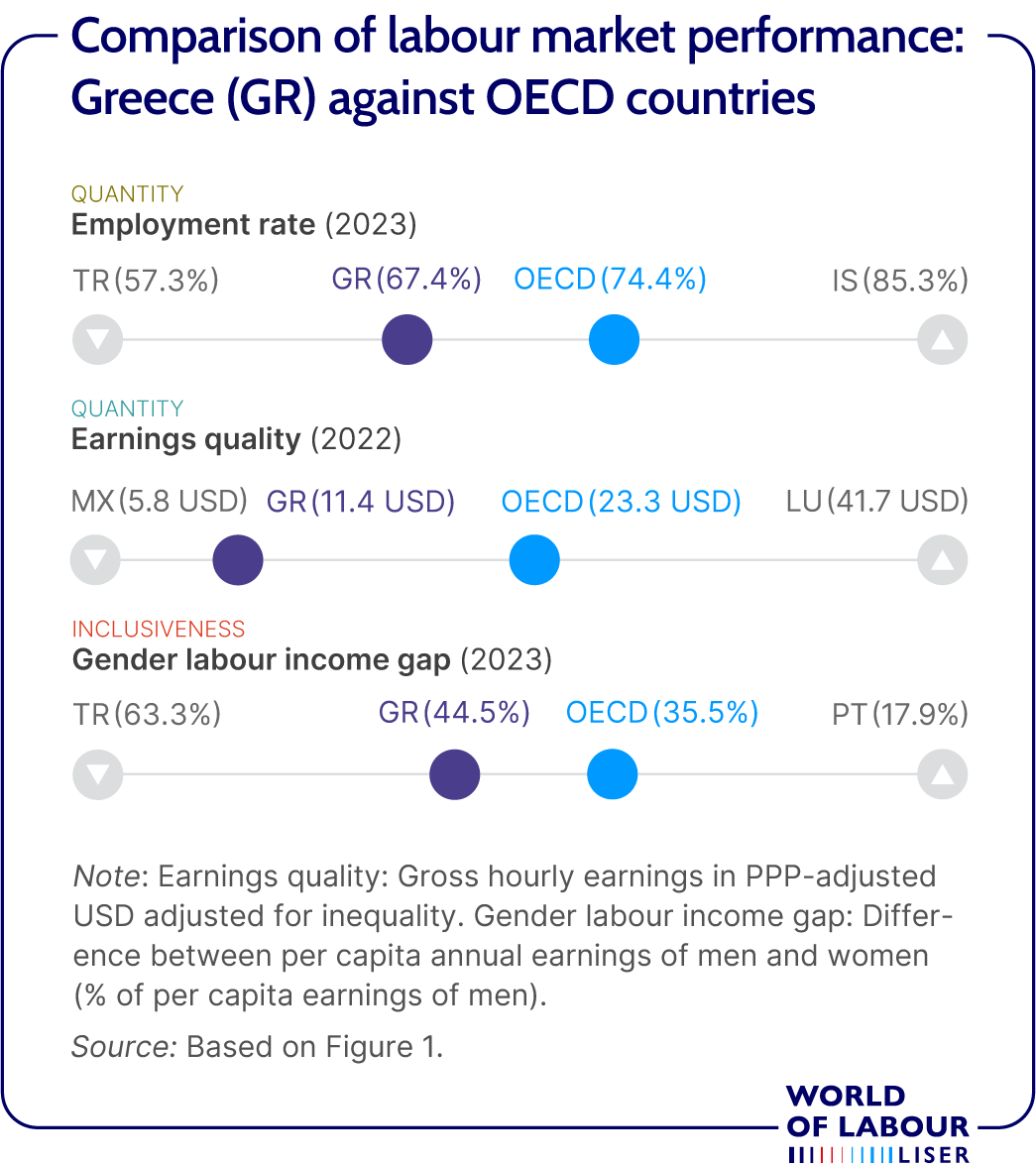
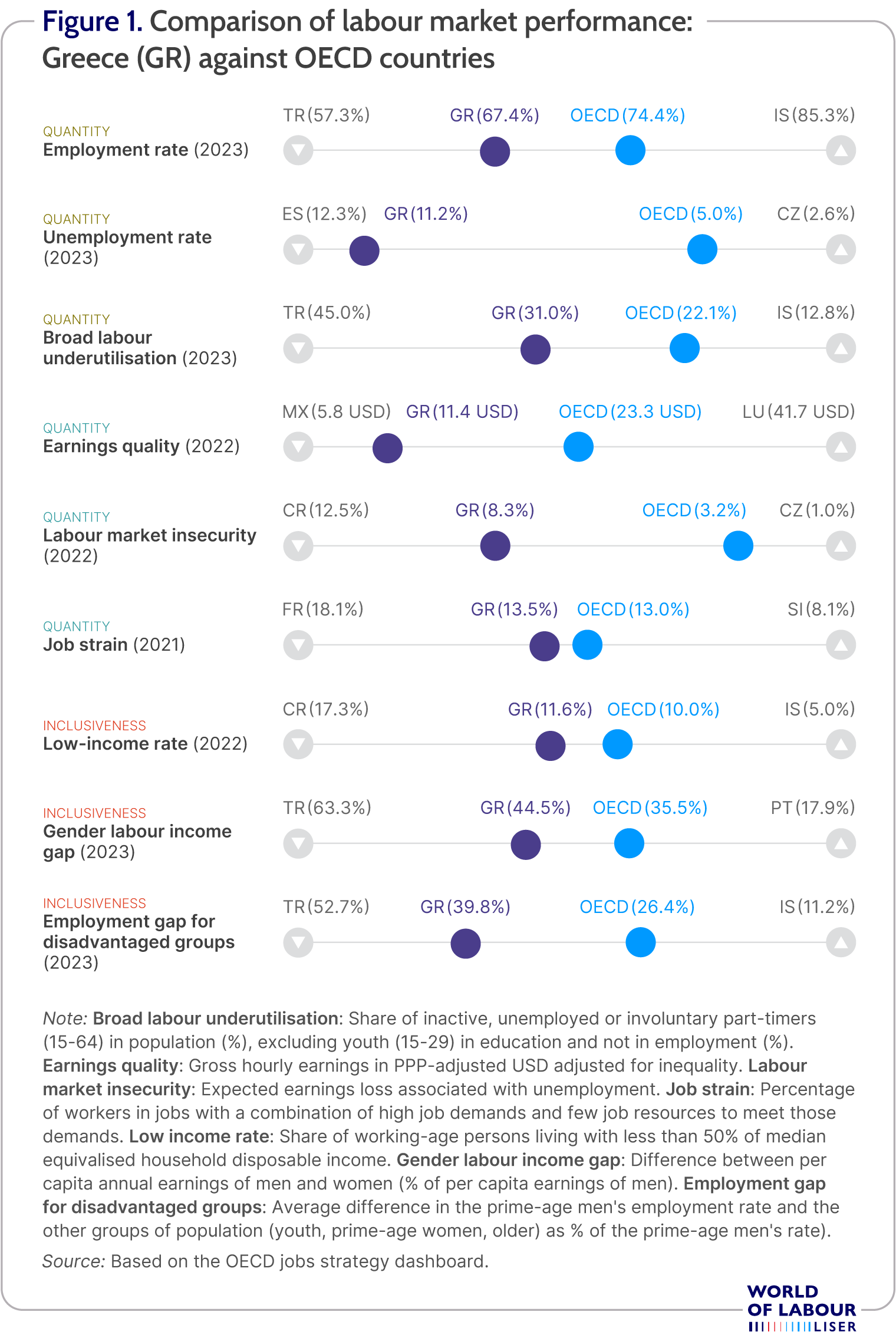
Overall, Greece presents a distinctive labour market profile: employment outcomes have improved, but income protection remains weak and earnings recovery remains incomplete. This suggests that the post-crisis recovery has been stronger in quantity than in job quality, a pattern summarized in Figure 1.
Discussion of strengths and weaknesses
Background and main challenges
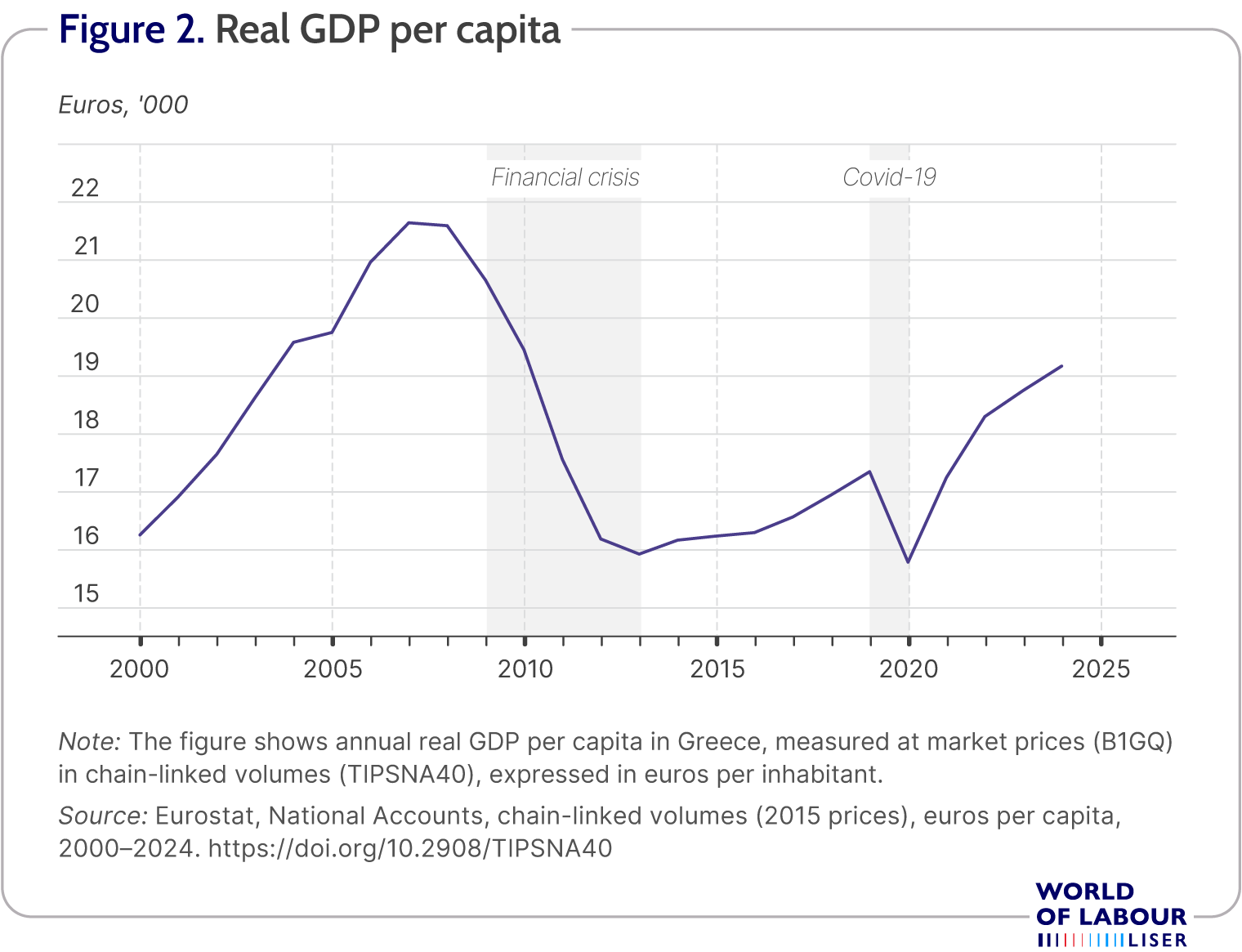
Following strong income growth and convergence toward EU targets in the early 2000s, Greece experienced one of the deepest and longest labour market crises among advanced economies after the 2008–2009 global financial crisis and the subsequent sovereign debt crisis [1]. Figure 2 summarizes the macroeconomic context, showing real GDP per capita from 2000 to 2024. Three phases stand out: pre-crisis expansion, a severe and prolonged contraction, and a gradual, incomplete recovery. The abrupt contraction led to exceptional employment losses and sharp declines in nominal and real earnings [2], with long-lasting effects on employment relationships, long-term unemployment, and labour income.
Employment and labour force participation
Total employment in Greece followed a clear boom–bust–recovery pattern over 2000–2024. Employment rose steadily until 2008, then fell sharply by nearly 24% between 2009 and 2013 as the crisis deepened [3]–Figure 3(a) illustrates the scale and persistence of the shock. Job losses were large and concentrated over a short period, while the recovery was slow and prolonged. Despite the rebound since the mid-2010s, job creation remained insufficient to restore employment to its pre-crisis peak.
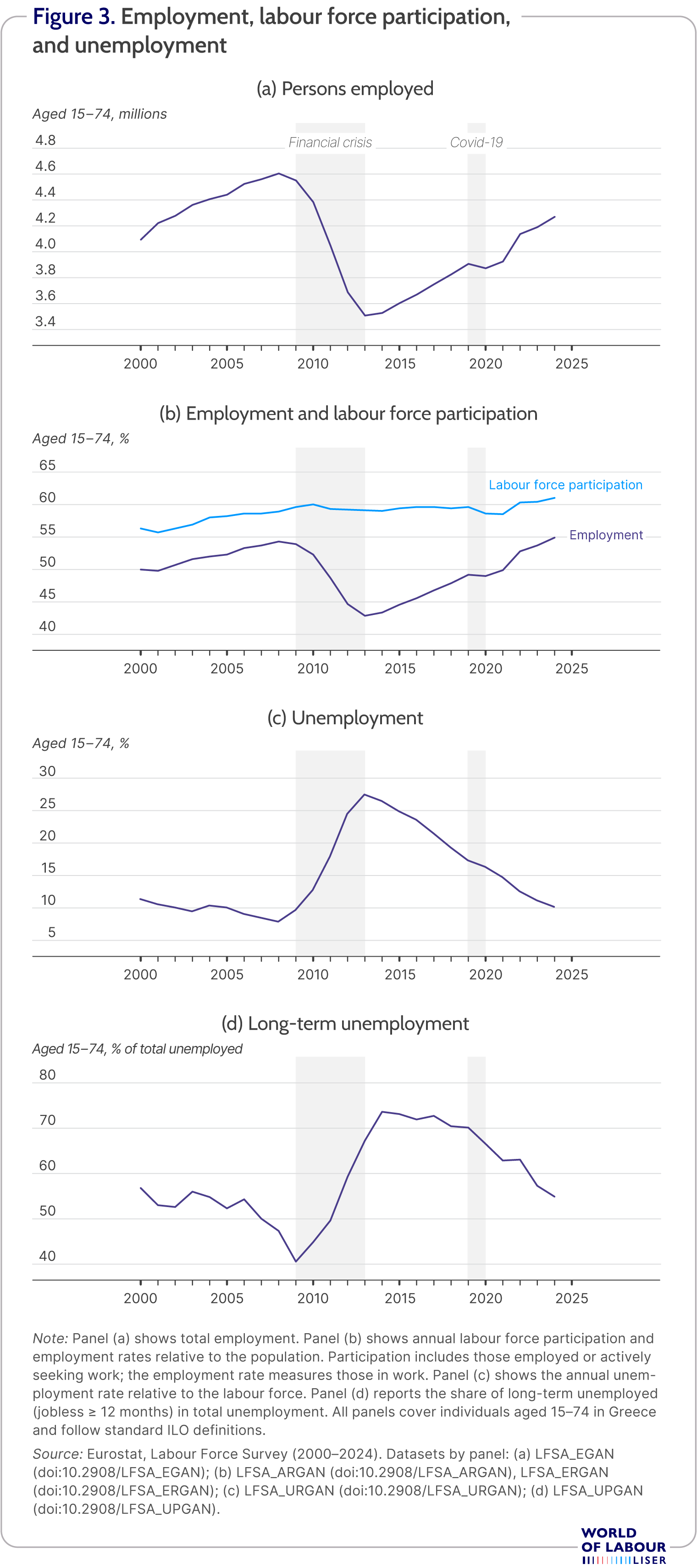 A key feature of Greece’s adjustment is that labour force participation moved far less than employment during the crisis. Participation declined modestly and remained broadly stable, while employment fell sharply (see Figure 3 (b)). This indicates that adjustment occurred mainly through rising unemployment rather than large exits from the labour force (through discouragement, early retirement, or inactivity). In the post-Covid-19 period, participation trends upward. This is likely to reflect recovering labour demand, cohort effects such as higher educational attainment, and institutional and demographic factors strengthening older workers’ labour force attachment.
Unemployment and long-term unemployment
Over 2000–2024, Greece consistently ranked among the EU countries with the highest unemployment rates, typically after Spain. As shown in Figure 3 (c), unemployment fell to single digits in the mid-2000s but rose sharply after 2008, peaking above 27% in the early 2010s. From 2013 onward, unemployment declined steadily but slowly. The recovery became more visible in the mid-2010s yet remained much weaker than the preceding surge. By 2024, unemployment was still well above its pre-crisis low, indicating that labour market slack has not been fully absorbed.
A key feature of the Greek unemployment experience is the very high incidence of long-term unemployment. As shown in Figure 3 (d), the share of unemployed individuals jobless for at least 12 months rose sharply during the crisis, making long-term unemployment the dominant form of joblessness. This share declined only slowly during the recovery and remained elevated even as overall unemployment fell. Long-term unemployment has consistently exceeded 50% of total unemployment, including in more favorable periods, pointing to persistent weaknesses in matching efficiency.
Despite the high incidence of long-term unemployment, the unemployment insurance system in Greece provides relatively limited and short-lived income support. Recent World Bank evidence based on administrative data for the period 2017-2023 indicates that a large share of registered unemployed is either not receiving benefits or receiving them only for short periods. While many unemployment spells are relatively short, income support is often exhausted well before re-employment, and long-term unemployment remains substantial.
Employment and labour force participation across workers
Labour market outcomes in Greece vary widely by age, gender, and education. Employment rates by group underscore the role of age and education in shaping crisis exposure and recovery (Figure 4). Youth (people aged 15–29) experienced the sharpest employment losses, and their rates remain depressed even during the recovery, reflecting strong scarring effects. This disadvantage is especially pronounced among low-educated youth, who faced both cyclical displacement and weaker employability [4]. In contrast, employment among older workers (aged 55–64) increased over time, particularly after the crisis. This reflects pension and retirement reforms, cohort effects such as higher female education, and a gradual reallocation of employment toward older age groups as the labour market recovered.
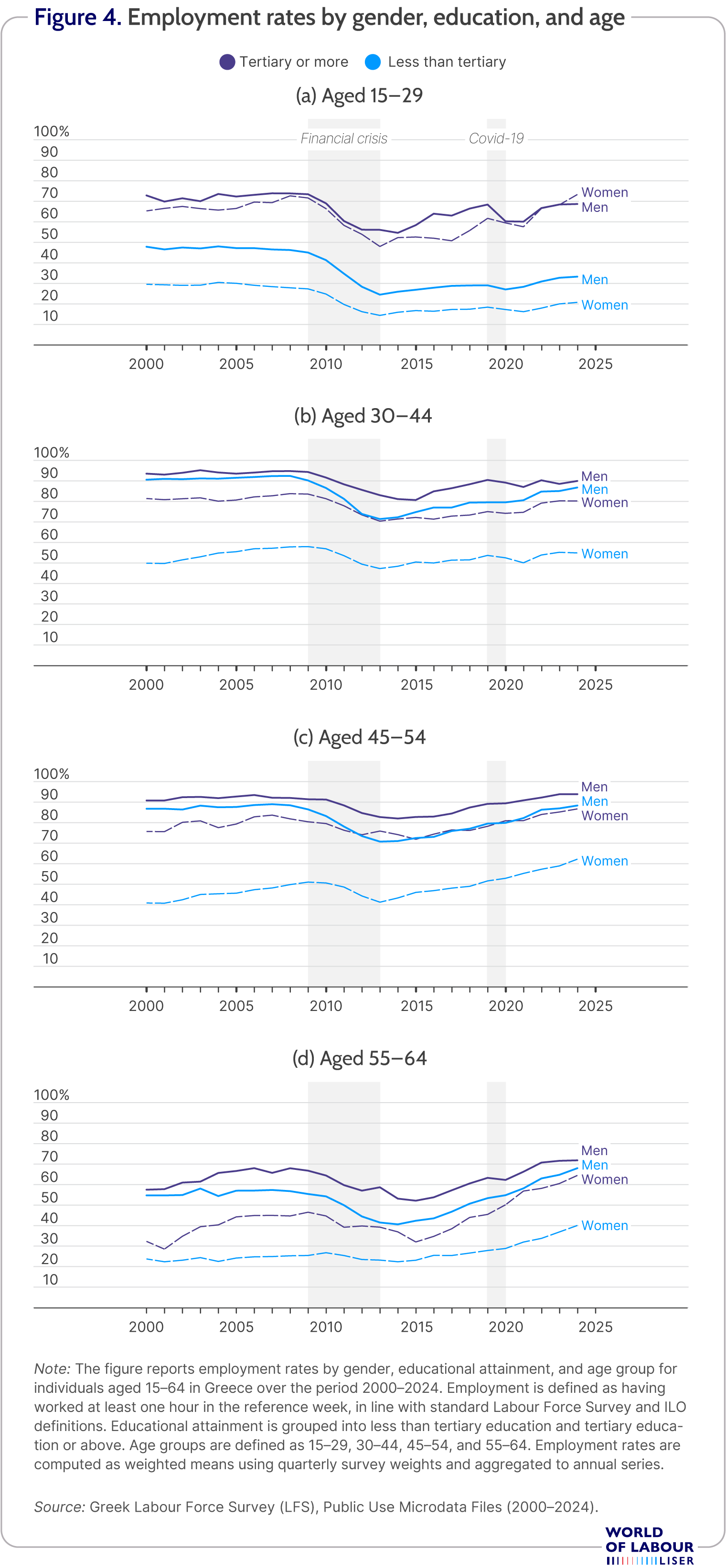 Figure 5 shows labour force participation by gender, education, and age revealing three clear patterns. First, participation follows a life-cycle profile: it is highest among prime-age individuals and lower among young and older workers, reflecting education-to-work transitions and retirement or health-related exits. Second, a strong education gradient persists across all ages, with tertiary-educated individuals displaying much higher participation and stronger labour market attachment. Third, gender gaps remain substantial, especially among older and less-educated groups, pointing to persistent constraints on female labour supply.
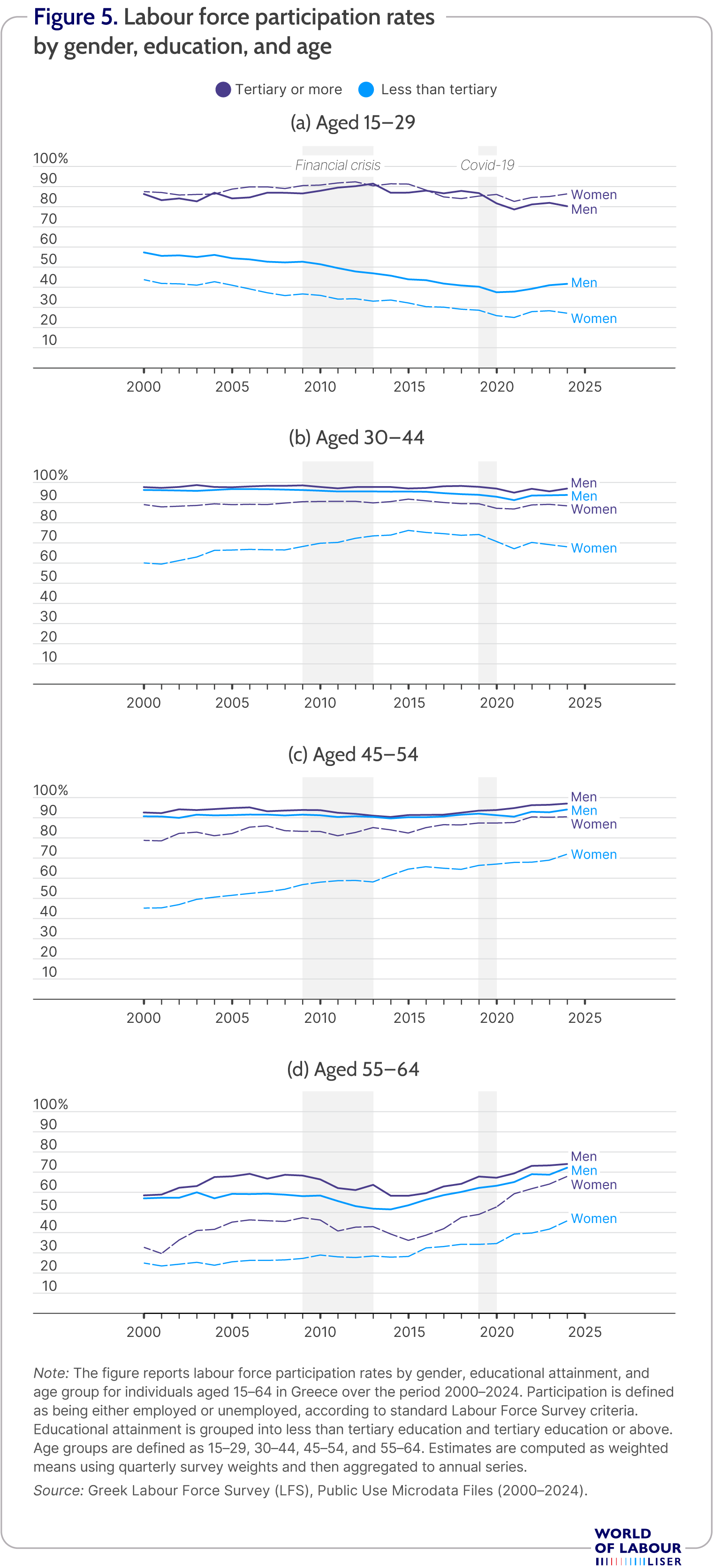 Among prime-age individuals (aged 30–44 and 45–54), tertiary-educated women show much higher participation than less-educated women, highlighting the strong role of education in female labour supply. Among older workers (aged 55–64), participation has risen over time—especially for women and the highly educated—reflecting cohort effects, higher education levels, and reforms that delayed retirement.
Structural change and employment composition
Sectoral reallocation
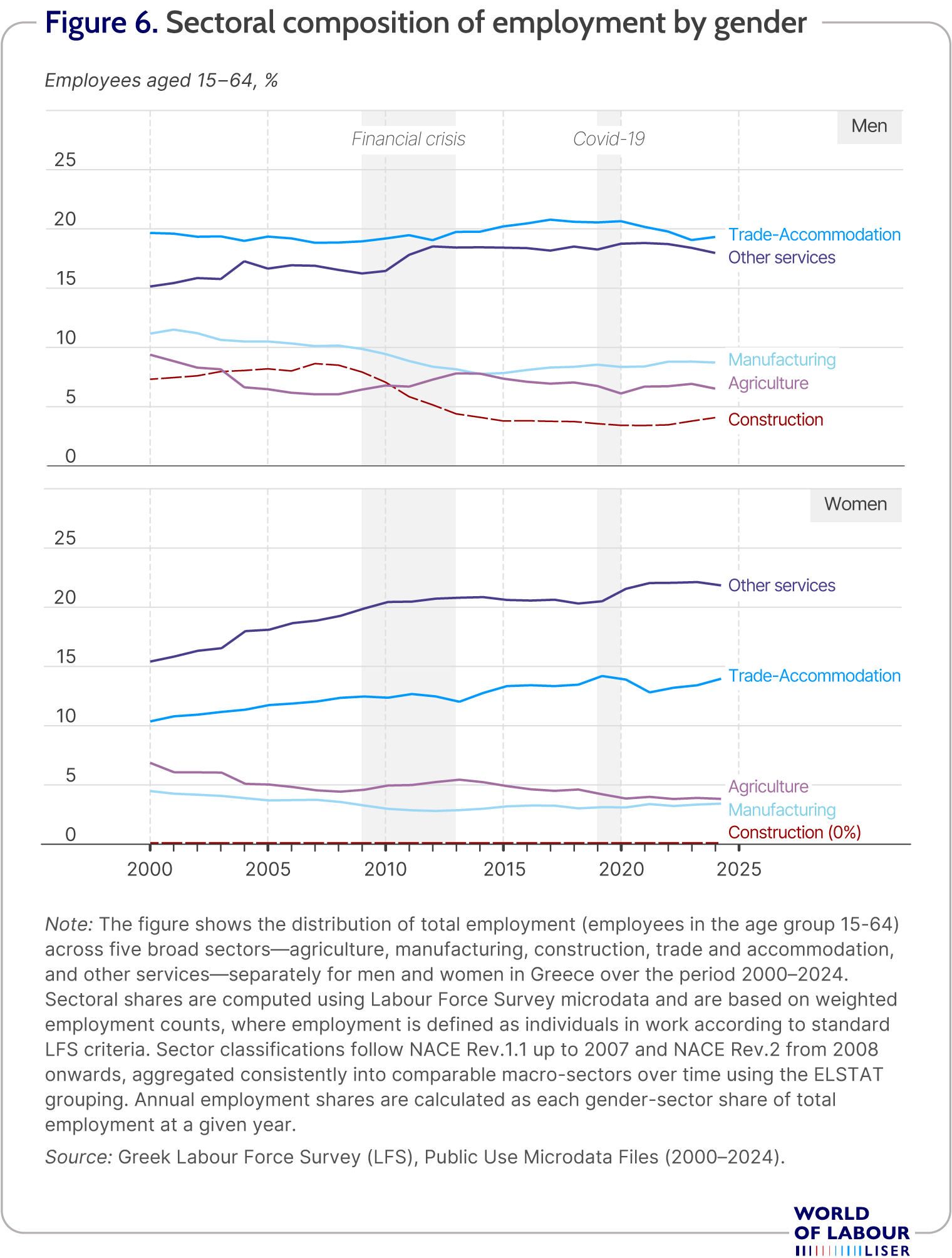
The Greek labour market underwent major structural change over 2000–2024, with employment shifting away from agriculture and industry toward services. Figure 6 highlights again three patterns. Agriculture shows a steady long-run decline, consistent with structural transformation. Manufacturing follows a persistent downward trend, reflecting deindustrialization and the collapse in demand during the crisis. Construction exhibits the strongest cycle: its employment share rose before 2008 and then collapsed during the sovereign debt crisis, mirroring the bursting of the credit-driven boom and the sharp fall in investment.
 Firm size reallocation
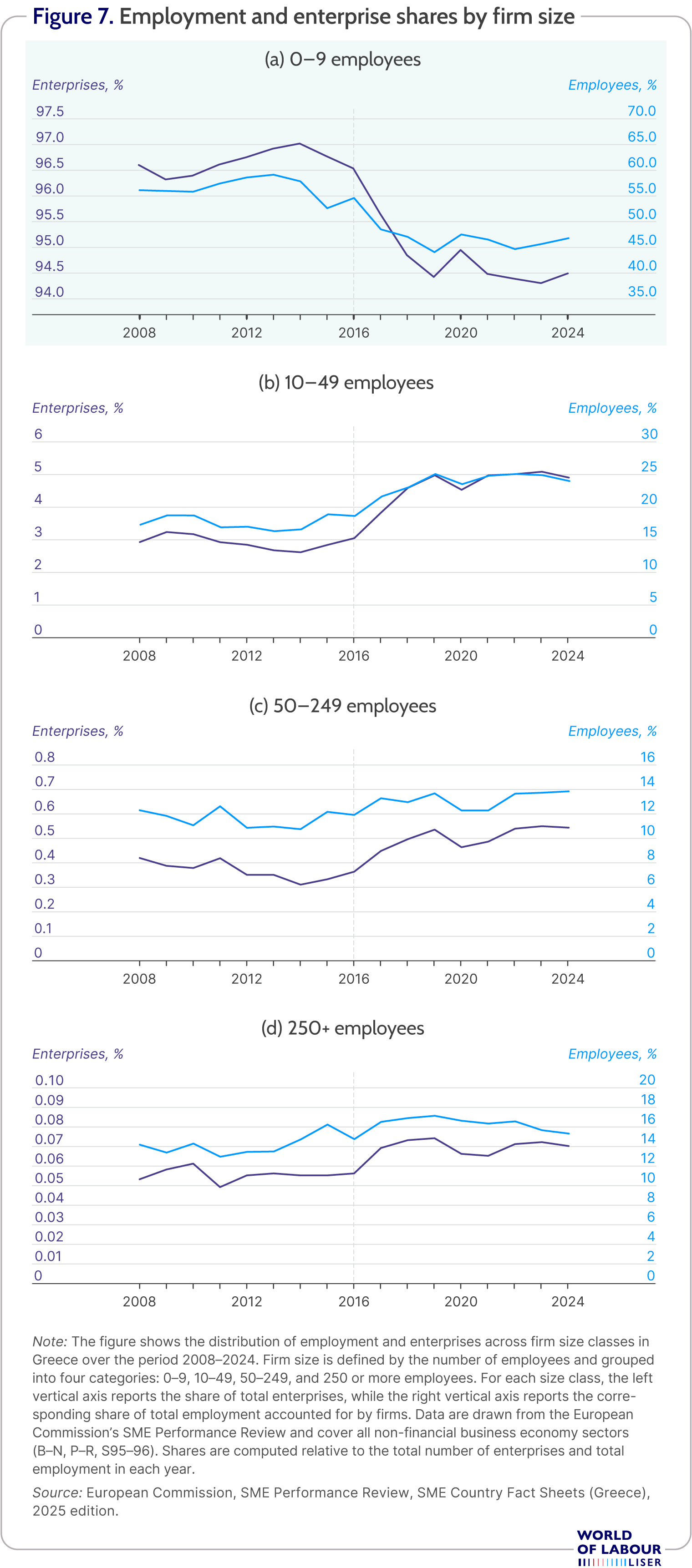
Micro-enterprises (with up to nine employees) account for the vast majority of firms in Greece over 2008–2024, but a much smaller share of total employment (Figure 7). This indicates a business structure dominated numerically by very small firms, while employment is more concentrated than firm counts suggest. At the same time, medium-sized and especially large firms represent only a small fraction of enterprises yet employ a disproportionate share of workers. This dual structure reflects a segmentation between many small firms and a limited number of large employers with high employment weight. Small firms tend to have lower productivity, thinner margins, and limited access to finance, making employment more sensitive to shocks and offering fewer opportunities for training and wage progression. From 2016 onwards, however, there is a noticeable decline in both the number of micro-enterprises and the share of workers employed in them, accompanied by a corresponding increase in enterprises employing 10–49 workers and their employment share. This pattern suggests a gradual reallocation of activity and employment towards slightly larger firms in the post-crisis period.
 Wages and minimum wage policy
Average wage dynamics
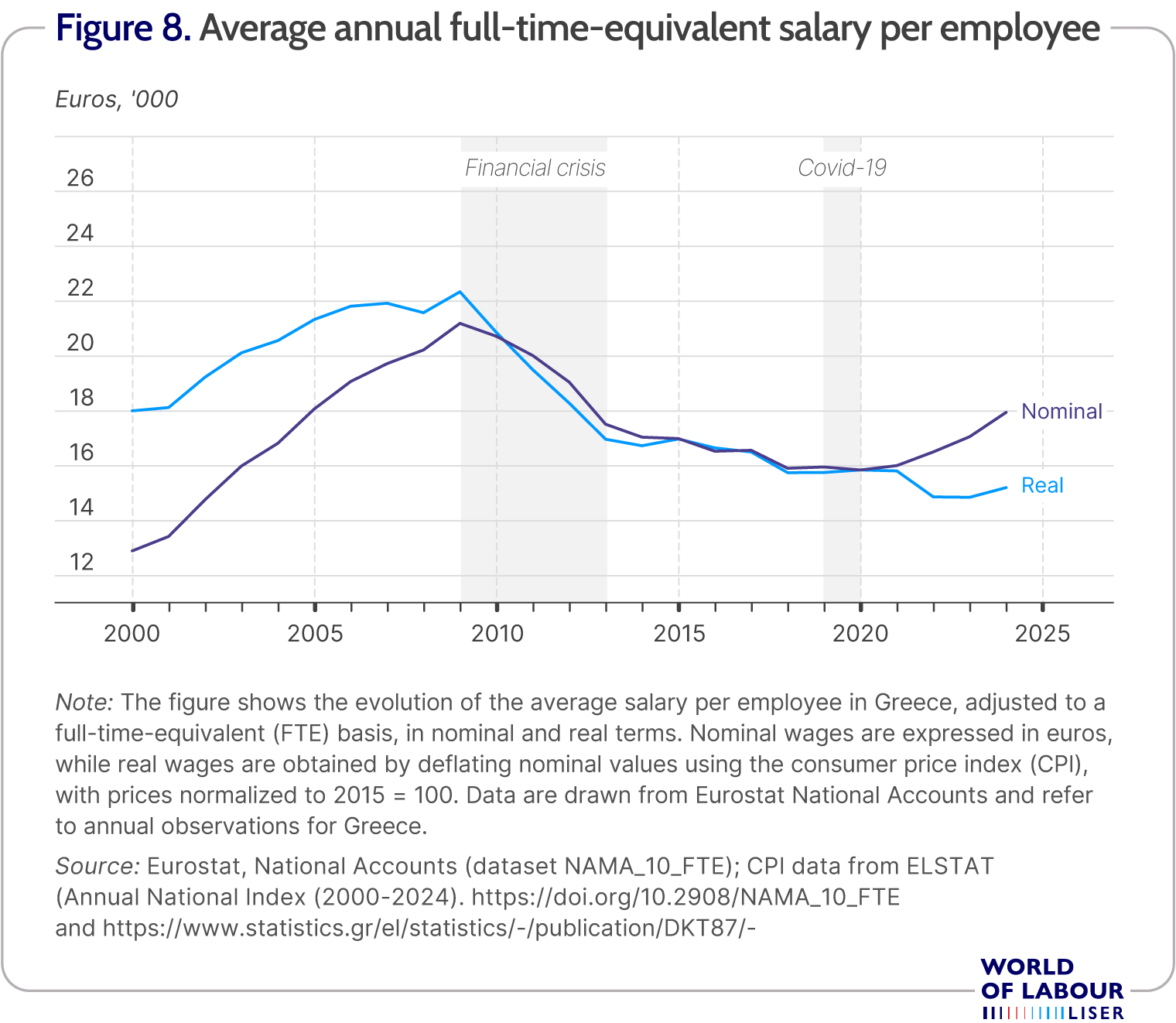
Average wages in Greece were strongly procyclical over 2000–2024. Nominal and real full-time-equivalent wages rose steadily before the crisis, in line with GDP growth, but this trend ended abruptly after 2009. During the sovereign debt crisis, wages fell sharply in both nominal and real terms, showing that adjustment occurred not only through job losses but also through substantial wage compression.
Figure 8 highlights two distinct phases in wage dynamics. During the crisis, nominal wages fell sharply, reflecting high unemployment, weakened bargaining power, and changes in wage-setting institutions. In the recovery, nominal wages stabilised and rose modestly, but real wages lagged behind. Periods of higher inflation widened the gap between nominal and real wages, indicating that wage growth was insufficient to fully protect purchasing power.
 Minimum wage developments
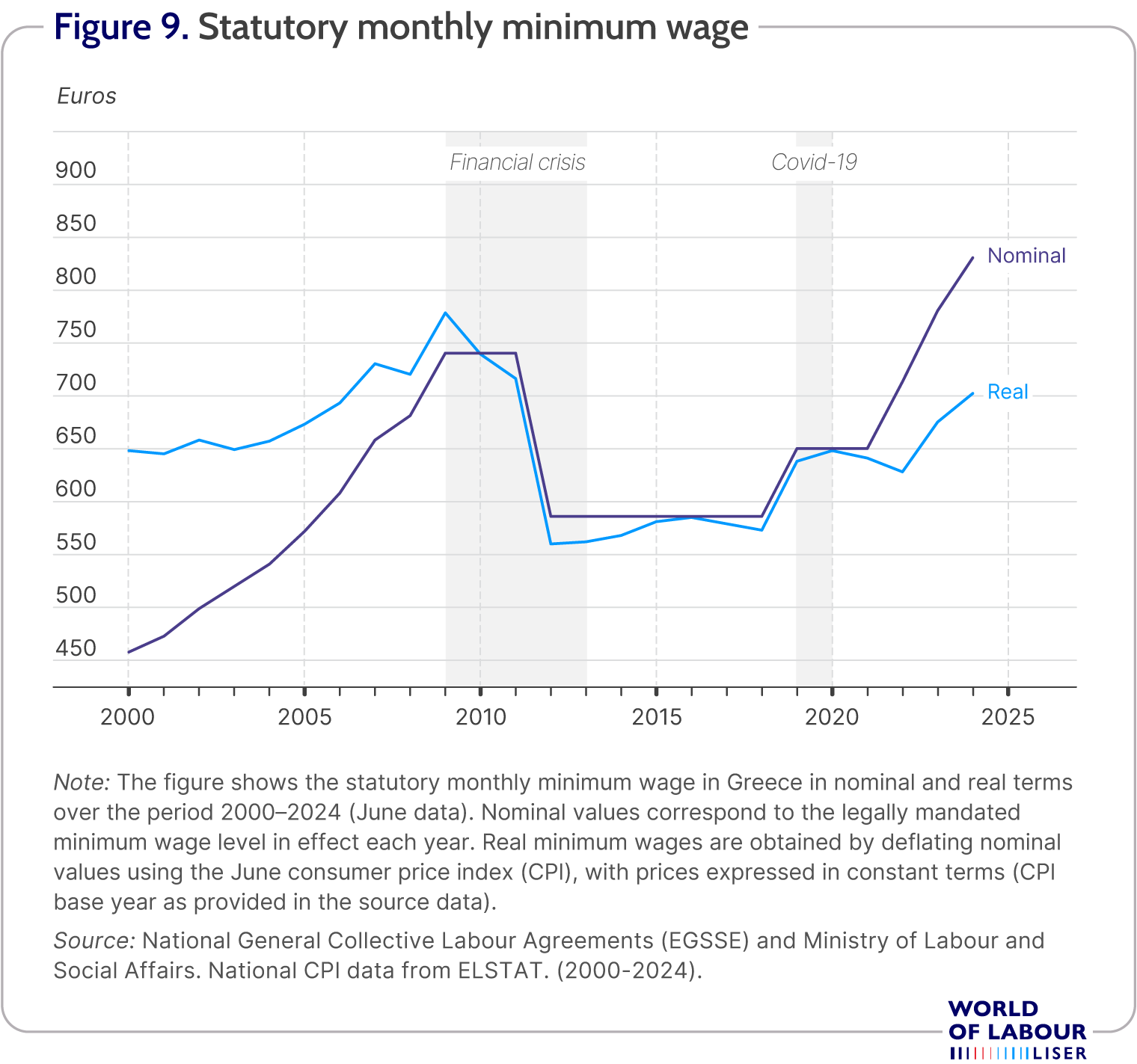
The statutory minimum wage in Greece experienced a major regime shift over 2000–2024 [5]. Before the crisis, it rose steadily in both nominal and real terms. In 2012, it was cut sharply by 22% (for those aged 25 and older) under the international adjustment programs aimed at restoring cost competitiveness [6]. This cut coincided with the decentralization of collective bargaining, increasing the importance of the statutory minimum wage as the main wage floor for low-paid workers.
Figure 9 shows these dynamics in nominal and real terms. The 2012 cut appears as a clear break, followed by years of nominal stagnation, with real and nominal trends moving closely until 2020 due to low inflation. From 2019, nominal increases signal a policy shift toward stronger wage floors, but rising inflation after 2021 eroded real gains, so recovery in real terms was gradual and incomplete until 2024. A key implication is that nominal increases do not automatically translate into proportional gains in living standards, especially in an economy where many low-paid workers are employed in small firms with limited wage-setting capacity, making the statutory minimum wage a central distributional tool.
 The relative position of minimum-wage workers can be summarised by the so-called “Kaitz index”, defined as the ratio of the statutory minimum wage to the average wage. Before the crisis, the index was stable at around 60% (computed using publicly available data from the EFKA Social Security Fund, National General Collective Labour Agreements (EGSSE) and Ministry of Labour and Social Affairs), reflecting parallel movements in minimum and average wages. This pattern broke in 2012, when the minimum wage cut led to a sharp decline in the ratio. From the mid-2010s, and especially after 2019, minimum wage increases outpaced average wage growth and the Kaitz index rose steadily, exceeding 70% after 2021. This increase signals a strengthening of the wage floor relative to the mean and a higher likelihood that the minimum wage is binding for a larger share of workers.
Collective bargaining and wage-setting institutions
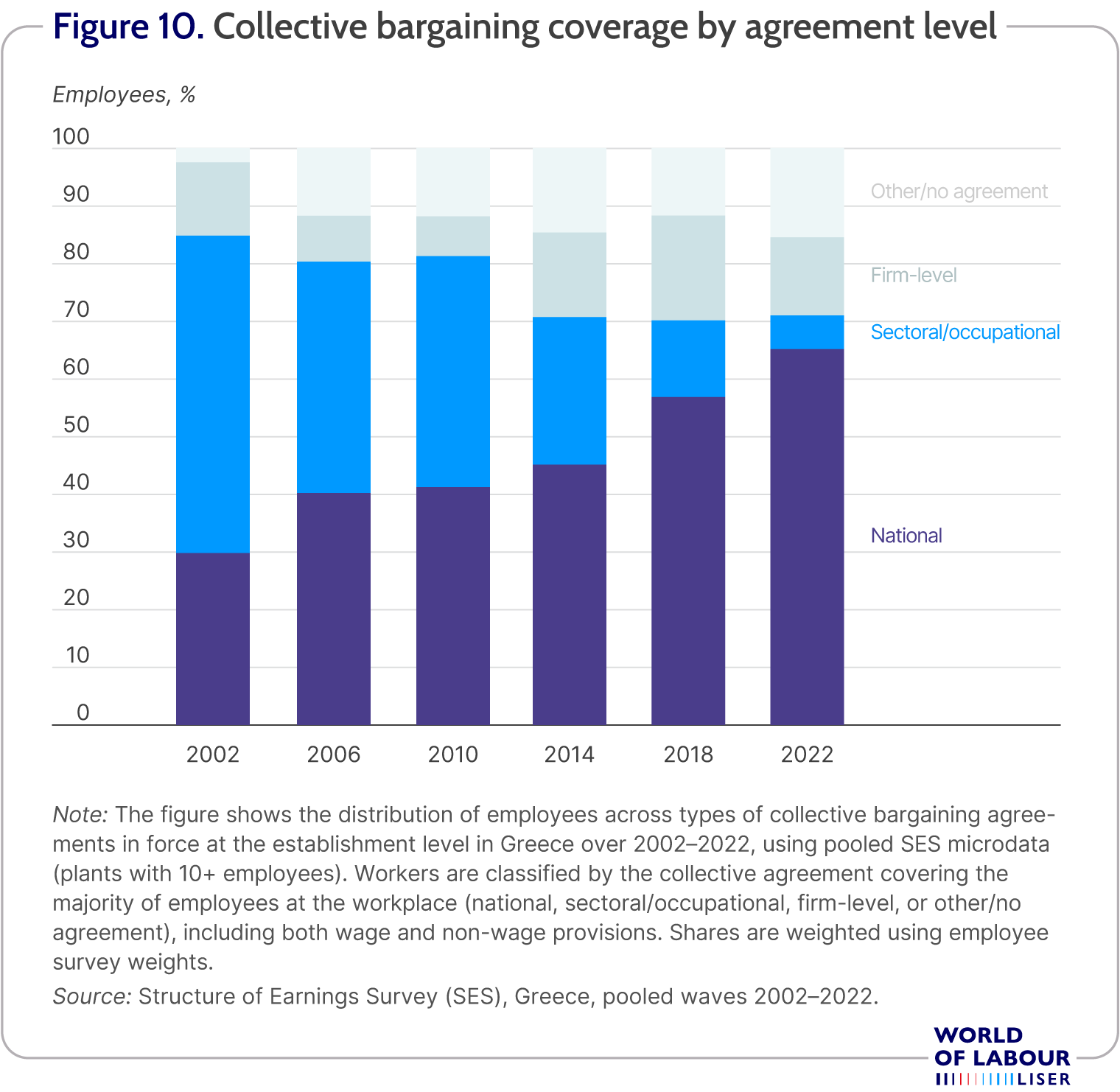
Wage-setting institutions in Greece changed fundamentally over the period studied, with a clear break around 2012. Before the reforms, collective bargaining had broad coverage and relied heavily on sectoral and occupational agreements, supported by the National General Collective Labour Agreement. This system limited wage dispersion provided predictable wage floors above the statutory minimum and facilitated coordination across firms and sectors.
The adjustment period led to a sharp decentralization of collective bargaining. Sectoral coverage collapsed, and wage setting shifted toward firm-level agreements and the statutory minimum wage as the main binding floor for many workers [7]. Figure 10 illustrates this shift in composition of collective bargaining agreement coverage at the establishment level, with sectoral agreements losing importance and national and firm-level arrangements becoming relatively more prevalent. The result was a move from coordinated wage setting to a more decentralized system, where pay depends more on firm conditions and individual bargaining power, with weaker sector-wide spillovers.
 This institutional shift has two main implications. First, it increased short-run wage flexibility, allowing firms to adjust labour costs more quickly during the demand collapse, partly supporting employment but at the cost of wage compression and weaker coordination. Empirical evidence shows that extending firm-level bargaining to smaller firms contributed to increased wage flexibility, mainly through downward adjustments in negotiated wage floors, and this reform was associated with positive employment effects at the firm level [7].
Overall, while these reforms were partially successful in improving adjustment and employment, they were less successful in preserving earnings quality and income security when assessed through a broader job-quality lens. Second, they elevated the role of minimum wage policy. As sectoral wage floors eroded, the statutory minimum wage became the main nominal anchor for low-wage work, shaping lower-tail wage dynamics and inequality. In this more decentralized system, minimum wage changes have wider effects, especially among small firms that lack collective bargaining mechanisms.
Limitations and gaps
While the descriptive evidence is clear, several causal questions remain open. First, credible estimates of the employment and hours effects of recent minimum wage increases in Greece—particularly by firm size, sector, and worker type—remain limited. Second, the labour-market consequences of bargaining decentralization, including its effects on wage dispersion, job stability, and mobility, require further evidence using matched employer–employee data. Third, there is only limited quasi-experimental evidence on the effectiveness of active labour market policies in reducing long-term unemployment and improving match quality in the post-crisis environment.
Summary and policy advice
Recent improvements in employment and unemployment coexist with policy trade-offs that are central in the Greek context. First, minimum wage policy has regained prominence as collective bargaining coverage weakened, strengthening the wage floor for low-paid workers but raising concerns about adjustment margins—especially in micro-enterprises where cost pass-through capacity is limited. Second, the persistence of long-term unemployment implies that cyclical recovery alone may be insufficient to restore employability for displaced workers, increasing the importance of activation policies, targeted training, and hiring incentives. Third, youth labour market outcomes remain fragile, reflecting both cyclical sensitivity and structural barriers in school-to-work transitions; policies that improve entry job creation and work-based learning may reduce scarring. Finally, Greece’s firm-size structure constrains productivity growth and wage progression, implying that long-run improvements in job quality depend not only on wage floors but also on policies that facilitate scaling and productivity-enhancing investment.
Acknowledgments
The authors thank the anonymous referee(s) and the World of Labour editors for helpful suggestions on earlier drafts.
Competing interests
The World of Labour project is committed to the European Code of Conduct in Research Integrity. The authors declare to have observed the principles outlined in the code.
© Effrosyni Adamopoulou and Nicholas Giannakopoulos


