
Elevator pitch
Greece’s labour market tells a mixed story. After one of the deepest crises in Europe, unemployment has fallen and employment has recovered, yet many problems remain. Long-term unemployment is still high, real wages have not fully regained their purchasing power, and most jobs are in small firms with limited growth prospects. At the same time, major reforms changed how wages are set, reducing collective bargaining and making the minimum wage the main pay floor for many workers. This raises an important question: has the Greek labour market truly recovered, or has it settled into a new and more fragile balance? Understanding this is key for designing policies that support stable jobs, fair pay, and inclusive growth in the future.
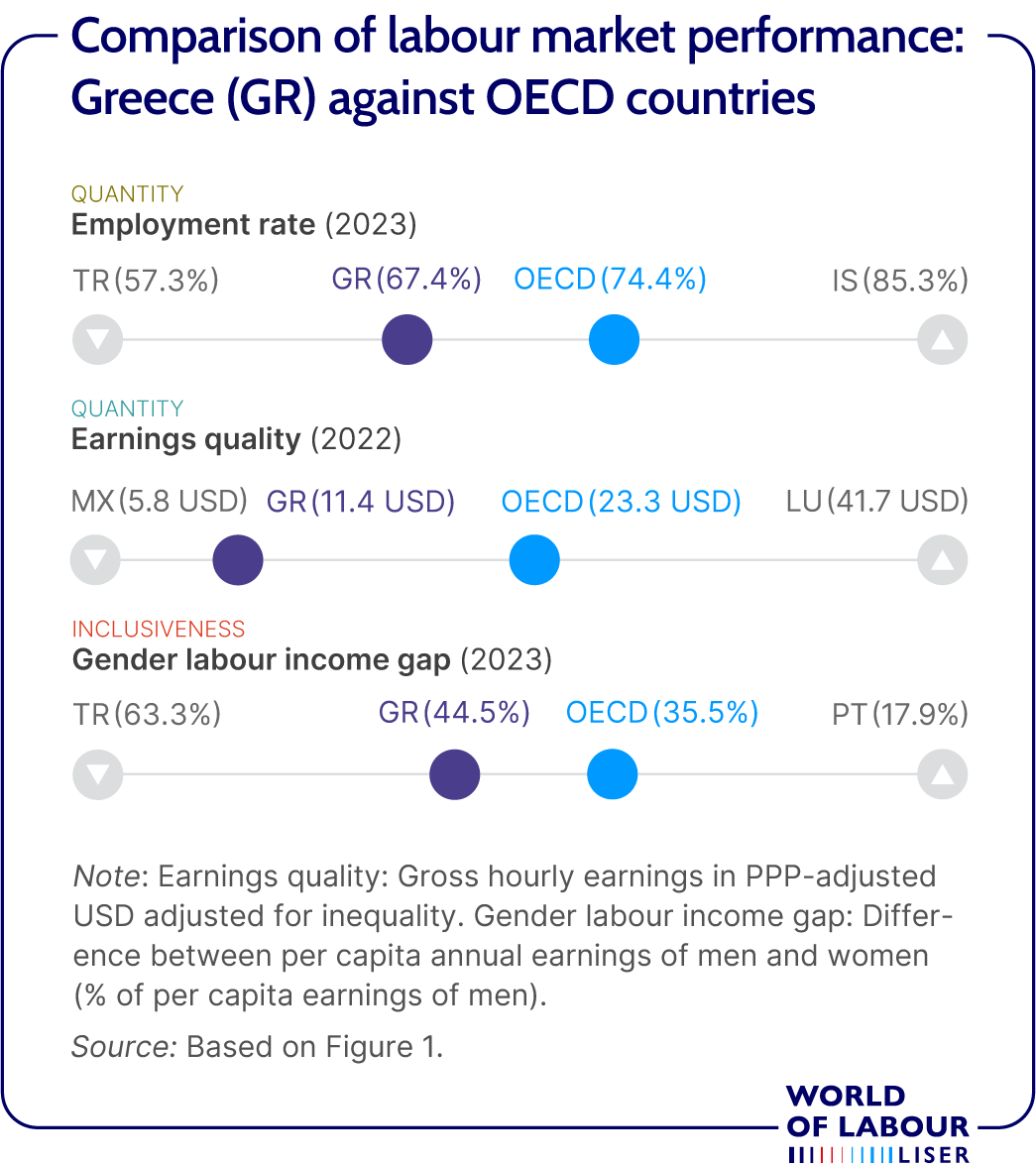
Key findings
Strengths
Labour force participation increased among women, older, and highly educated individuals.
Decentralization raised wage flexibility so that firm-level wage setting now better reflects differences in productivity and local conditions supporting firm survival and limiting employment losses in some segments.
Minimum wage increases since 2019 that raised pay at the bottom partly and helped support incomes and reduce inequality in the presence of weak collective bargaining.
Weaknesses
Unemployment rose sharply during the crisis and declined gradually while long-term unemployment remained high well into the recovery.
Employment is concentrated in small, low-productivity firms and particularly young and low-educated workers face higher unemployment and weak recovery.
Nominal wage cuts were unprecedented so that real wages fell sharply and recovered only partially, further constrained by recent inflation.
The decline in sectoral bargaining reduced wage coordination and collective bargaining coverage, shifting wage determination increasingly toward decentralized firm-level bargaining.
The statutory minimum wage became the main wage floor for low-paid workers, with post-2019 increases contributing to wage compression at the lower end of the wage distribution.


