
Elevator pitch
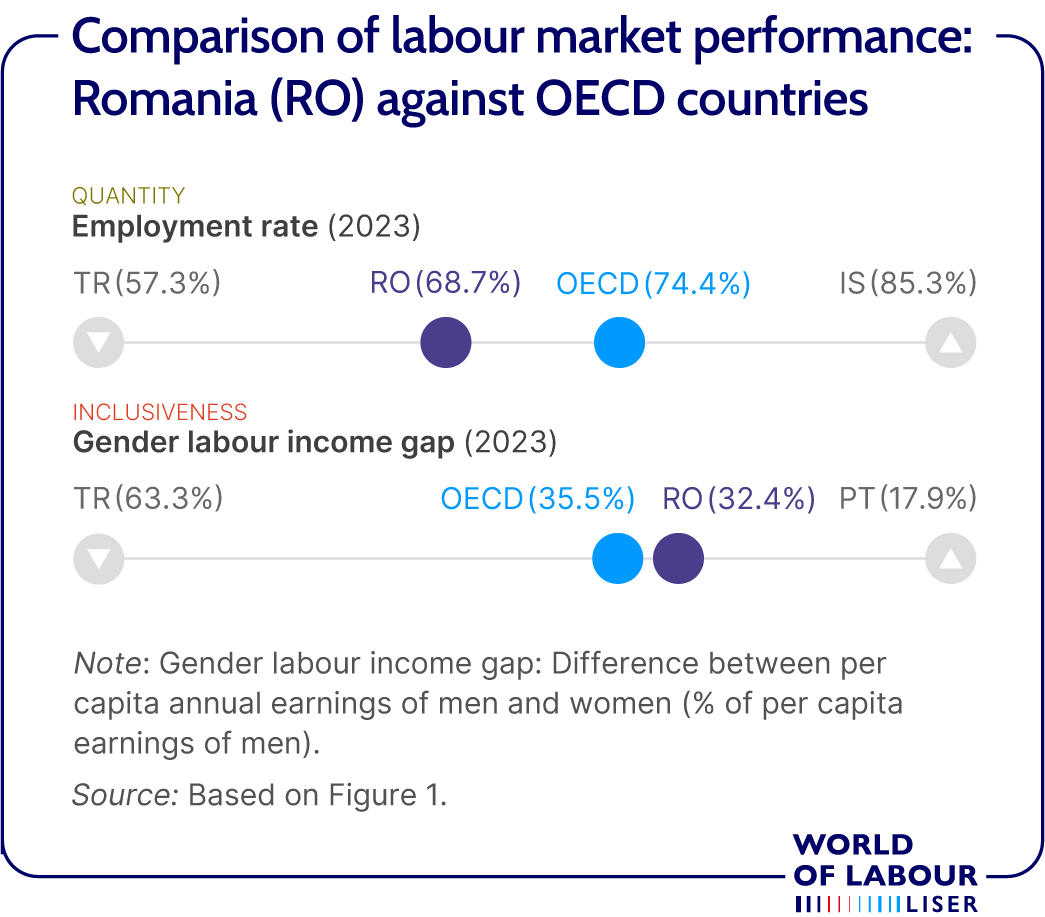
Romania’s labour market faced major structural challenges from 2000 to 2024. Employment rates have risen, but the number of employed individuals has reduced mainly due to demographic decline and emigration. The workforce is aging and young people face difficulties in transitioning from education to employment. Persistent disparities by gender, region, area of residence, education, and age constrain labour supply and deepen inequalities. Limited public resources and institutional and legislative weaknesses limit the effectiveness of labour market integration policies for vulnerable groups and allow informal employment to persist.
Key findings
Strengths
The overall employment rate increased from 2000 to 2024, despite adverse demographics.
Unemployment and long-term unemployment have remained relatively low over the past decade.
Wages have grown consistently over time, supporting living standards and reducing in-work poverty among employees.
The introduction of an objective minimum wage setting and data-driven tools for skills anticipation and labour market policies evaluation strengthens labour market governance.
Weaknesses
Chronic structural inequalities limit labour market participation and reinforce social and territorial disparities.
Romania faces persistently low employment rates for women, young people, low-educated, rural residents, and other disadvantaged groups.
Youth unemployment and NEET (not in education, employment, or training) rates are particularly high, indicating that young people face challenges transitioning from education to employment.
Undeclared work remains widespread and regionally concentrated, weakening worker protection and reducing tax revenues.
Very low public spending on unemployment and activation policies reduces the effectiveness of support for jobseekers and vulnerable groups.


