
Elevator pitch
Colombia’s labour market has largely recovered from the Covid-19 shock, with employment and unemployment returning to pre-pandemic levels. However, compared with OECD countries, labour market performance remains constrained by poor job quality, widespread informality, and persistent gender and regional disparities. Low labour productivity, a statutory minimum wage that is high relative to median earnings, elevated non-wage labour costs, and wage rigidities continue to constrain formal job creation, making productivity-enhancing policies and greater formalization the country’s main labour market priorities.
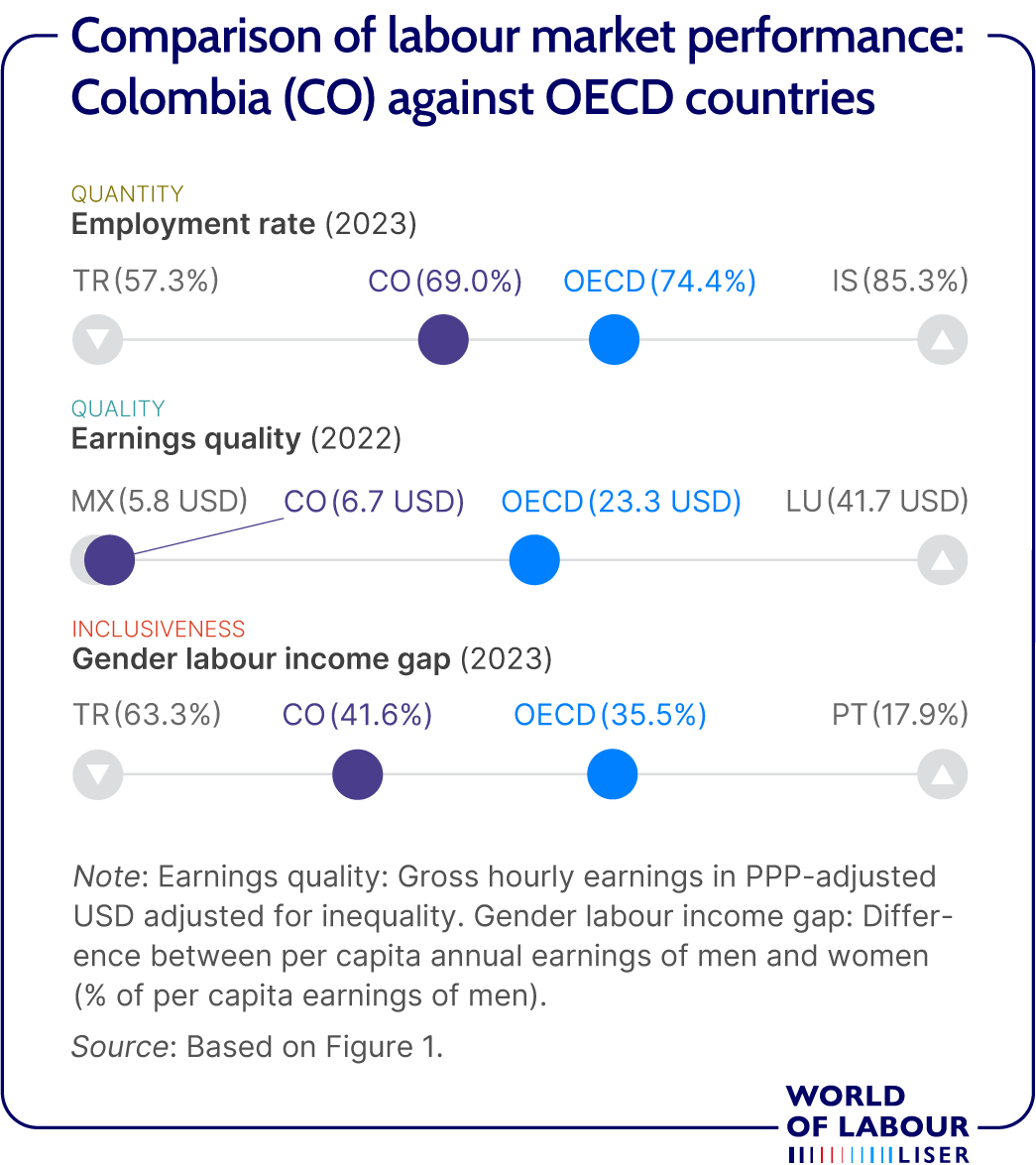
Key findings
Strengths
The labour market recovered strongly after the Covid-19 shock, with labour force participation, employment, and unemployment returning close to pre-pandemic levels by 2025.
The educational attainment of the labour force has improved, with a growing share of workers holding technical, technological, and university qualifications.
The share of wage employment increased, while self-employment declined, indicating gradual improvements in the employment structure.
Real hourly earnings increased steadily over the period, while the gender gap in median hourly earnings narrowed substantially.
Weaknesses
Unemployment remains structurally high despite the post-pandemic recovery, reflecting limited capacity to generate sufficient quality jobs.
Informality continues to affect around four out of every ten urban workers, remaining one of the country's main labour market challenges.
Earnings inequality remains high, particularly among self-employed workers, reflecting persistent labour market segmentation.
Large gender gaps persist in labour force participation, employment, and unemployment, despite improvements in women's earnings.
Labour market outcomes continue to differ markedly across metropolitan areas, revealing persistent territorial disparities in employment opportunities and earnings.


