
Elevator pitch
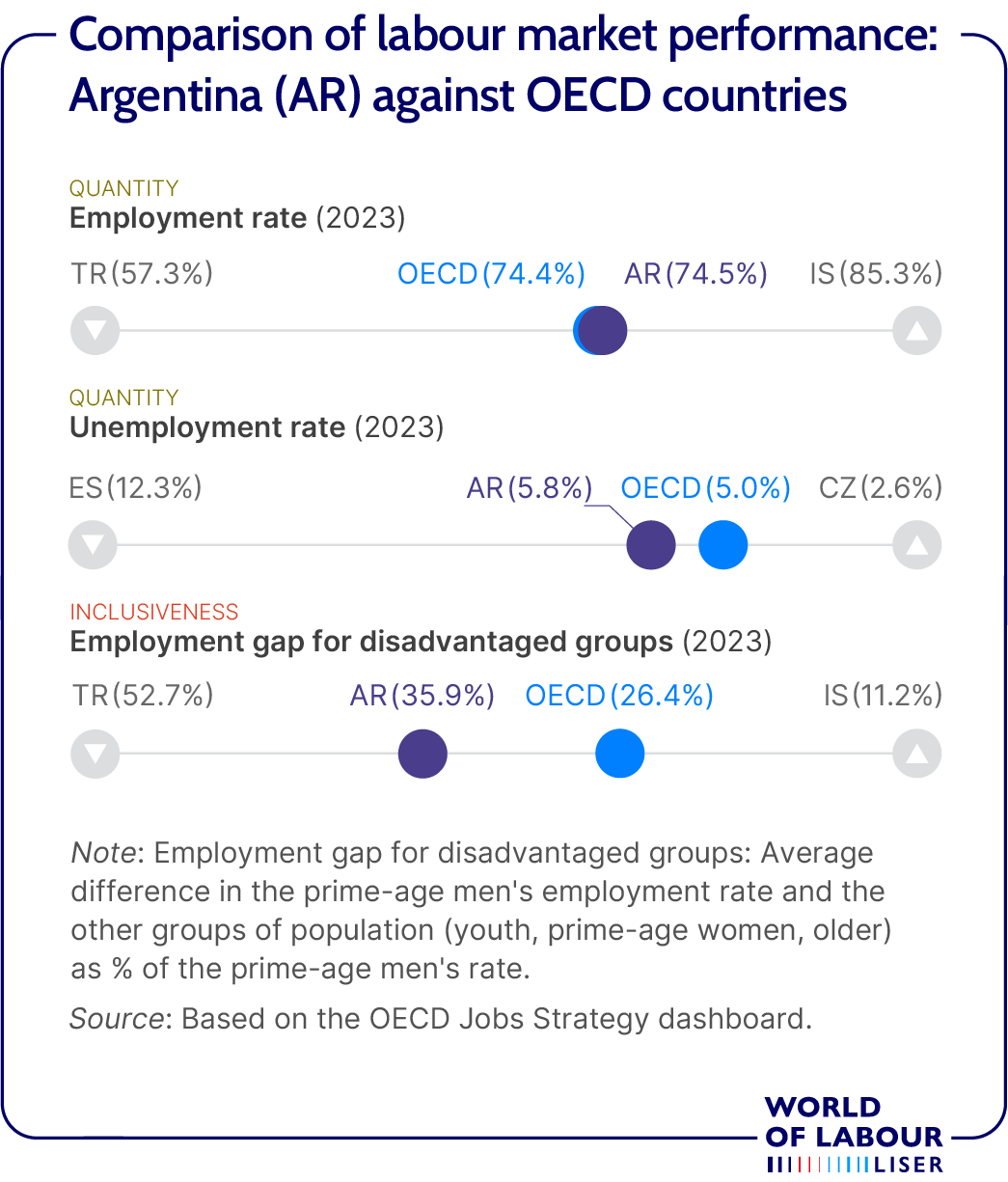
Argentina’s labour market experienced two sharply contrasting periods. The first, between 2003 and 2012, was characterized by falling unemployment, rising real wages, declining inequality, and improvements in formal employment. The second was marked by prolonged macroeconomic instability, stagnant productivity, and deteriorating labour market conditions. Despite relatively low unemployment rates, real wages collapsed, informality remained persistently high, and a growing share of workers became poor despite being employed. At the same time, human capital accumulation among younger cohorts has weakened significantly. Argentina's labour market challenge is no longer primarily one of unemployment but of job quality.
Key findings
Strenghts
Female labour force participation increased substantially, reducing gender gaps in employment.
Unemployment declined significantly relative to the crisis levels of the early 2000s.
Employment rates remain relatively high despite repeated macroeconomic crises.
Labour-income inequality declined substantially during the 2000s.
Weaknesses
Recurrent macroeconomic instability has significantly deteriorated labour market conditions since 2012.
Real wages have declined sharply, particularly since 2018.
Job quality remains poor, with persistently high levels of informality and underemployment.
Human capital accumulation among younger cohorts is deteriorating at an alarming rate.
Argentina has struggled to create formal private-sector jobs over the last decade.


